
 +86-510-88156399



Shell and tube exchangers are a cornerstone of modern heat transfer technology, commonly employed in a wide range of industrial applications. The question of whether these exchangers can be used in refrigeration systems is a significant topic, one that has practical implications for both the refrigeration industry and shell and tube exchanger suppliers like us.
1. Understanding Shell and Tube Exchangers
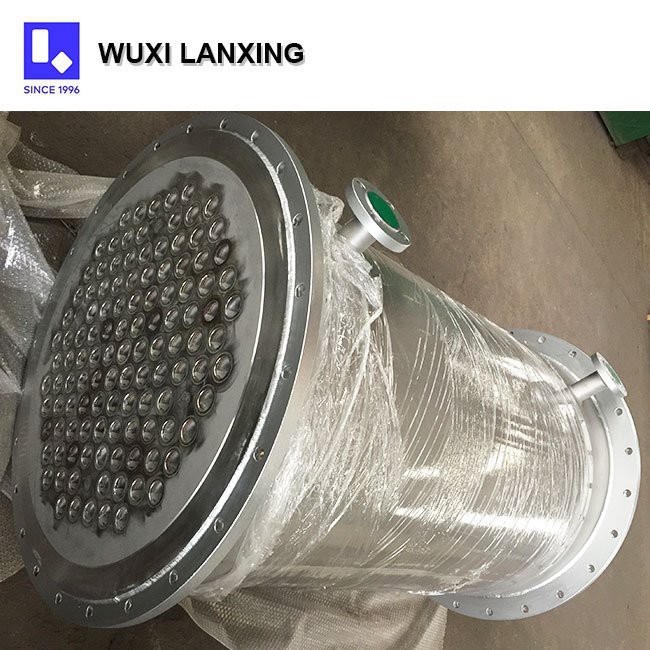
Shell and tube exchangers are heat transfer devices that consist of a bundle of tubes enclosed within a cylindrical shell. One fluid flows through the tubes (tube - side), while another fluid flows around the tubes (shell - side). The heat transfer occurs across the tube walls, allowing the temperature of the two fluids to change.
We offer a variety of shell and tube exchangers. For instance, our Steel Shell and Tube Heat Exchanger is highly durable and suitable for many industrial settings. Steel has good thermal conductivity and is relatively inexpensive, making it a popular choice for applications where cost - effectiveness is a key factor.
Our Titanium Shell and Tube Heat Exchanger is another option. Titanium is known for its excellent corrosion resistance, which is crucial in environments where the fluids are corrosive. This type of exchanger can withstand harsh chemical conditions, ensuring a longer service life and reliable performance.
The U Tube Heat Exchanger is a specialized design. The U - shaped tubes allow for thermal expansion without causing excessive stress on the structure. This design is particularly useful in applications where there are significant temperature variations between the shell - side and tube - side fluids.
2. Use of Shell and Tube Exchangers in Refrigeration Systems
Refrigeration systems work on the principle of removing heat from a space or substance to maintain a lower temperature. There are several points where shell and tube exchangers can play a vital role in these systems.
Condensers
In a refrigeration cycle, the condenser is responsible for removing heat from the refrigerant vapor, causing it to condense into a liquid. Shell and tube exchangers can be used as condensers. The hot refrigerant vapor flows through the tubes, while a cooling fluid, such as water or air, flows around the tubes on the shell - side. The large surface area provided by the tube bundle allows for efficient heat transfer, ensuring that the refrigerant is effectively condensed.
The choice of the exchanger material depends on the nature of the refrigerant and the cooling medium. For example, if the refrigerant is a corrosive substance and the cooling water has a high mineral content, a titanium shell and tube exchanger would be a better choice due to its corrosion - resistant properties.
Evaporators
Shell and tube exchangers can also function as evaporators in refrigeration systems. In an evaporator, the liquid refrigerant absorbs heat from the surrounding medium, such as air or a liquid, and evaporates into a vapor. The refrigerant flows through the tubes, and the medium to be cooled flows on the shell - side. The design of the shell and tube exchanger enables efficient heat transfer, allowing the refrigerant to absorb heat rapidly and cool the medium.
The design parameters of the exchanger, such as the tube diameter, tube pitch, and shell configuration, need to be carefully selected to optimize the heat transfer performance in the evaporator application.
3. Advantages of Using Shell and Tube Exchangers in Refrigeration Systems
High Heat Transfer Efficiency
Shell and tube exchangers offer a large surface area for heat transfer due to the presence of multiple tubes in the bundle. This high surface - area - to - volume ratio enables efficient heat exchange between the refrigerant and the cooling/heating medium, improving the overall performance of the refrigeration system.
Durability and Reliability
Manufactured from high - quality materials like steel and titanium, our shell and tube exchangers are built to last. They can withstand high pressures and temperatures, ensuring long - term operation in the demanding environment of refrigeration systems. This reduces the need for frequent maintenance and replacement, resulting in lower operating costs.
Flexibility in Design
Shell and tube exchangers can be customized to meet the specific requirements of different refrigeration systems. The number of tubes, tube diameter, shell size, and other design parameters can be adjusted to optimize heat transfer performance, accommodate different flow rates, and fit into the available space.
4. Challenges and Considerations
Fouling
Fouling is a common problem in heat exchangers, including those used in refrigeration systems. Deposits of dirt, minerals, and biological matter can accumulate on the tube surfaces, reducing the heat transfer efficiency. Regular cleaning and maintenance are required to prevent fouling. We offer guidelines and support to our customers on how to effectively clean and maintain our shell and tube exchangers to minimize fouling.
Refrigerant Compatibility
The refrigerant used in the system must be compatible with the materials of the shell and tube exchanger. Some refrigerants may be reactive with certain metals, which can lead to corrosion and damage to the exchanger. Careful selection of the exchanger material based on the type of refrigerant is essential to ensure the longevity of the equipment.
Cost
The initial cost of shell and tube exchangers can be relatively high, especially for specialized designs or those made from expensive materials like titanium. However, when considering the long - term benefits of high efficiency, durability, and reliability, the overall cost - effectiveness of using shell and tube exchangers in refrigeration systems can be quite favorable.

5. Conclusion and Call to Action
In conclusion, shell and tube exchangers can indeed be used in refrigeration systems, serving as condensers and evaporators with significant advantages. Their high heat transfer efficiency, durability, and design flexibility make them a valuable component in modern refrigeration technology.
If you are in the market for shell and tube exchangers for your refrigeration system, we are here to help. Our team of experts can provide you with detailed information about our products, assist you in selecting the most suitable exchanger for your specific needs, and offer support throughout the installation and maintenance process. Contact us to start a discussion about your requirements and explore how our shell and tube exchangers can enhance the performance of your refrigeration system.
References
- Incropera, F. P., & DeWitt, D. P. (2002). Fundamentals of Heat and Mass Transfer. John Wiley & Sons.
- Stoecker, W. F., & Jones, J. W. (1982). Refrigeration and Air Conditioning. McGraw - Hill.


