banner
Products Categories
Contact Us
Tel: +86-510-88156399
Mob1: +8615852701809
Mob2: +8615951506886
Mob3: +8615952470757
Email: Zyc@cn-lxjt.com
Add: No.19, Feng Er Road, Xinwu District, Wuxi City, Jiangsu Province, China
Alloy Steel Tubular Heat Exchanger

Alloy Steel Tubular Heat Exchanger

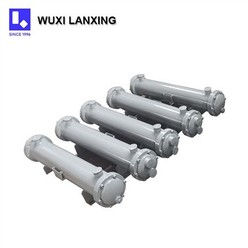
LanXing manufactures customized Alloy Steel Tubular Heat Exchangers for high-temperature, high-pressure and demanding industrial heat transfer applications.

Send InquiryChat Now

Product Introduction

LanXing manufactures customized Alloy Steel Tubular Heat Exchangers for high-temperature, high-pressure and demanding industrial heat transfer applications. Designed according to specific process conditions, our tubular heat exchangers can be configured for chemical processing, petrochemical plants, oil and gas, power generation, refining, energy and other industrial applications.

An Alloy Steel Tubular Heat Exchanger uses tubular heat-transfer surfaces to transfer thermal energy between two fluids while keeping the process media separated. Alloy steel can be selected for applications where higher temperature resistance, mechanical strength, pressure capability or improved resistance to specific operating environments is required compared with conventional carbon steel.

Depending on the process, LanXing can provide shell and tube, U-tube, straight-tube and other customized tubular heat exchanger configurations. Tube materials, shell materials, tube diameter, tube length, number of tube passes, heat-transfer area, pressure rating and connection configuration can be engineered according to the customer's requirements.


product-750-957


How Does a Tubular Heat Exchanger Work?

Hot Fluid Enters

The hot process fluid enters either the tube side or shell side depending on the process design.

01

Cold Fluid Enters

The cooling or heating medium enters the opposite flow passage.

02

Heat Transfer Occurs

Thermal energy moves from the hotter fluid through the tube wall to the colder fluid.

03

Fluids Remain Separated

The tube wall prevents direct contact between the two process streams.

04

Heated or Cooled Fluid Exits

The outlet temperatures are controlled according to the required process conditions.

05


Technical Specifications

 
Parameter Specification / Options
Product Alloy Steel Tubular Heat Exchanger
Heat Exchanger Type Shell & Tube / U-Tube / Straight Tube
Heat Duty Customized
Heat Transfer Area Customized
Tube Material Alloy Steel / Stainless Steel / Customized
Shell Material Carbon Steel / Alloy Steel / Stainless Steel
Tube Diameter Customized
Tube Length Customized
Tube Thickness Engineering Calculation
Number of Tubes Customized
Tube Passes 1 / 2 / 4 / Customized
Shell Passes Customized
Tube Side Pressure Customized
Shell Side Pressure Customized
Design Pressure Customized
Operating Temperature Customized
Design Temperature Customized
Hot Fluid Customized
Cold Fluid Customized
Flow Rate Customized
Heat Transfer Coefficient Engineering Calculation
Allowable Pressure Drop Customized
Fouling Allowance Customized
Tube Sheet Carbon Steel / Alloy / Stainless Steel
Baffle Type Customized
Connection Flange / Customized
Surface Treatment Customized
Insulation Optional
Testing Hydrostatic / Pneumatic / NDT as applicable
Manufacturing Standard ASME / GB / Customer Specification
OEM / ODM Available


product-750-714


Heat Transfer Applications
 

Feed Preheating

The exchanger can recover heat from a hot process stream and transfer it to a colder feed stream.

Process Cooling

Hot process fluids can be cooled using cooling water or another suitable cooling medium.

Process Heating

Cold process fluids can be heated using steam, thermal oil or another hot fluid.

Gas Cooling

High-temperature gases can be cooled through an appropriately designed tubular exchanger.

Oil Cooling

Tubular heat exchangers can be configured for industrial oil cooling applications.

Heat Recovery

Waste heat from one process stream can be recovered and transferred to another process stream.


Quality Control

Raw Material Inspection

Material specifications and documentation are verified.

Welding Inspection

Welding procedures and weld quality are controlled throughout fabrication.

Non-Destructive Testing

NDT methods are selected according to project and code requirements.

Dimensional Inspection

Critical dimensions, nozzle locations and tube bundle configuration are checked.

Pressure Testing

Pressure tests are performed according to the applicable standard.

Final Documentation

Project documentation can include applicable inspection records and manufacturing documentation according to the agreed scope.


product-750-778


FAQ

Q: What is the difference between alloy steel and stainless steel?

A: Alloy steel and stainless steel have different compositions and properties. Stainless steel generally contains at least approximately 10.5% chromium, while alloy steel refers more broadly to steels with additional alloying elements.

Q: Why use alloy steel for a heat exchanger?

A: Certain alloy steels provide improved high-temperature strength, mechanical performance or resistance to specific operating environments.

Q: Can the tubes be stainless steel?

A: Yes. Stainless steel tubes can be combined with carbon steel or alloy steel shells when appropriate.

Q: Can the shell and tubes use different materials?

A: Yes. Material combinations can be customized according to the conditions on each fluid side.

Q: What types of tubular heat exchangers are available?

A: Options include shell and tube, U-tube, straight-tube, fixed tube sheet and floating-head configurations.

Q: Can the heat exchanger be designed for high pressure?

A: Yes. The pressure boundary can be engineered according to the required design pressure and applicable code.

Q: Can it be used at high temperatures?

A: Selected alloy steel grades can be considered for elevated-temperature applications. The exact material must be determined according to the design temperature and process conditions.

Q: What industries use alloy steel heat exchangers?

A: Common applications include oil and gas, petrochemical, chemical processing, refining, power generation and energy industries.

Q: What information is required for heat exchanger design?

A: Important information includes fluid type, flow rate, inlet and outlet temperatures, operating pressure, design pressure, allowable pressure drop and material requirements.

Q: How is the heat-transfer area determined?

A: The heat-transfer area is calculated based on heat duty, temperature difference, heat-transfer coefficient, flow conditions and fouling allowance.

Q: Can the tube diameter be customized?

A: Yes. Tube diameter and wall thickness can be selected according to thermal, mechanical and cleaning requirements.

Q: Can tube length be customized?

A: Yes. Tube length can be customized according to heat-transfer requirements and installation space.

Q: Can U-tube construction be provided?

A: Yes. U-tube configurations can be manufactured for suitable applications.

Q: What testing is performed?

A: Depending on the project, testing can include hydrostatic testing, leak testing, dimensional inspection and NDT.

Q: Can third-party inspection be arranged?

A: Yes. Third-party inspection can be incorporated according to customer and project requirements.

Q: Can LanXing manufacture according to customer drawings?

A: Yes. OEM manufacturing based on customer drawings and technical specifications is available.

Q: How is the material selected?

A: Material selection should consider fluid composition, temperature, pressure, corrosion, mechanical loads, fouling and applicable design standards.

Q: How can I request a quotation?

A: Send your heat exchanger datasheet or provide fluid type, flow rate, inlet/outlet temperatures, operating pressure, design pressure, material requirements and quantity.


Hot Tags: alloy steel tubular heat exchanger, China alloy steel tubular heat exchanger manufacturers, suppliers, factory, miller furnace heat exchanger, shell and tube chiller, heat transfer equipment, heat exchanger in refinery, heat exchanger for gear oil coolers, funke plate heat exchanger


Related Products