+86-510-88156399



Hydraulic oil coolers are heat exchangers that are designed to remove excess heat from the hydraulic oil in a system.
Send InquiryChat NowWhat Is Hydraulic Oil Cooler?
Hydraulic oil coolers are heat exchangers that are designed to remove excess heat from the hydraulic oil in a system. They are typically made up of a series of tightly packed tubes which are arranged in a manner that facilitates the transfer of heat from the hydraulic oil to the surrounding air.
Temperature control:
Hydraulic oil coolers' main advantage is controlling temperature. They avoid overheating, which may result in oil deterioration and system problems, by keeping the hydraulic oil within the range of temperatures that are advised.
Improved system efficiency:
The thermal regulation provided by hydraulic oil coolers ensures that the system operates efficiently. When hydraulic oil is too hot, it loses viscosity, and its carrying capacity becomes unsteady. The result is that less power is transmitted through the system, leading to reduced efficiency. A well-maintained hydraulic oil cooler helps to stabilize the system temperature, optimizing fluid viscosity and transmission of power, making it possible to transmit more power, more steam, and more efficiently.
Increased lifespan of hydraulic system components:
Hydraulic oil cooler can increase the life of hydraulic systems. Maintaining the optimal operating temperatures reduces wear and tear of system components, extending their lifespan.
Consistent performance:
Even under heavy-duty or continuous use, hydraulic systems with oil coolers offer consistent performance, assuring dependable operation.
Reduced downtime:
Hydraulic oil cooler prevents overheating and system failures, which is crucial in industrial settings and lowers downtime.
Benefits for the environment:
Cooler hydraulic oil lowers the danger of oil oxidation and deterioration, which may result in less frequent oil replacement and disposal, promoting environmental sustainability.

Heat Exchanger for Air Compressor
We produce Heat Exchanger For Air Compressor in strict accordance with industry standards and processes. Our company has a strict production management system to ensure the quality of each product. We support all kinds of things, welcome to consult.

Our company produces and supplies Air Compressor Heat Exchanger. The equipment is developed by using quality-inspected raw materials according to industry specifications and using advanced technology.

Fixed Tube Sheet Heat Exchanger
Fixed Tube Sheet Heat Exchanges refers to a shell-and-tube heat exchanger in which the tube sheets at both ends of the tube bundle are fixedly connected to the shell by welding. After the tube sheet is welded to the shell, it can also be used as a flange, and it is connected with the flange of the tube box by bolts.

Tube Bundle Heat Exchangers are a typical heat exchange equipment that allows two fluids with different temperatures to exchange heat. Through this equipment, one fluid can be cooled and the other fluid can be heated to meet their respective needs.

Double Tube Heat Exchanger is used for evaporation, heating, condensation, and cooling processes. It is a necessary equipment for heat exchange and transfer in the production process.
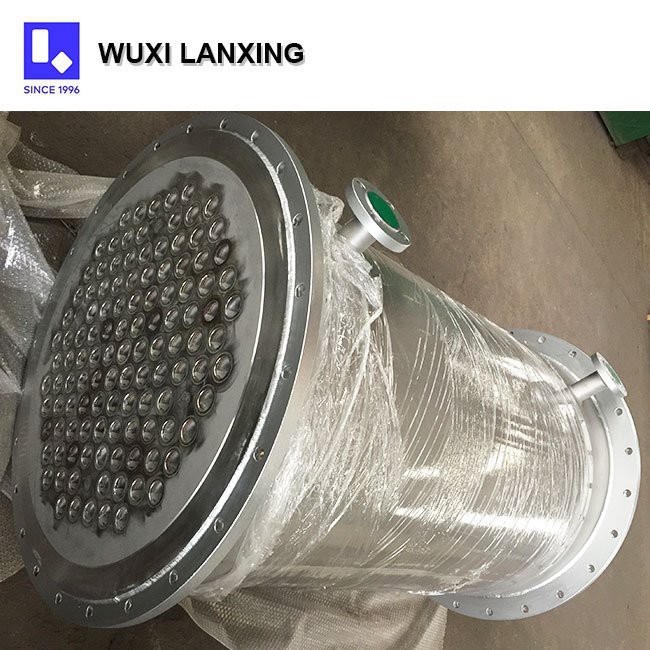
Titanium Shell and Tube Heat Exchanger
Titanium Shell And Tube Heat Exchanger is a heat exchange device made of high-quality titanium tubes that transfers part of the heat of the hot fluid to the cold fluid.

Stainless Steel Heat Exchanger Shell Tube
Stainless Steel Heat Exchanger Shell Tube is a heat exchanger made of stainless steel material. It has very good oxidation resistance, safety and hygiene, and is widely used in food, medicine, heating, domestic water, air conditioning backwater and other fields.

Steel Shell and Tube Heat Exchanger
Steel Shell And Tube Heat Exchanger is one of our company's best-selling products. We have modern equipment and management to ensure product quality. We have the ability to produce products that meet ASME, PED, CE, JIS, IBR, MOM, DOSH, GB and other standards.

Shell and Tube Heat Exchanger Used for Oil Cooling
Shell And Tube Heat Exchanger Used For Oil Cooling adopts corrosion-resistant high-efficiency heat transfer tubes, which are arranged closely and reasonably to strengthen the heat transfer coefficient, effectively improve the heat transfer effect and effectively extend the service life.
Our factory
Our factory covers 15,000 square meters area including modern workshops, testing center of flaw detection, physical and chemical labs, welding labs and the office building.
Professional team
With 130 professional staff, we are dedicated to providing the high efficient, quality products and excellent services.
Production equipment
Various Welding Machines, Roller, Shearer, Bending Machine, X Ray Detection Machines, Traveling Cranes.
Rich experience
Operation experience of professional foreign trade export projects.

Air cooled hydraulic oil coolers:
Air cooled hydraulic oil coolers have electric or hydraulic fans that cool the heated fluid by moving air through the cooler.These coolers are simple in design and connection, which makes them affordable and allowing for a wide range of application scenarios.
Water cooled hydraulic oil coolers:
Water-cooled hydraulic oil coolers depend on water as than the cooling medium, whereby heat from the hydraulic oil is dissipated. This involves designing a heat exchanger where water and oil travel in the same space: Oil is pumped through a tube while water is pumped through a jacket surrounding these tubes.
Shell and tube hydraulic oil coolers:
Shell and tube hydraulic oil coolers make a subgroup of water-cooled coolers. However, they stand apart from other water-cooled coolers and have their unique design. They belong to the tube-in-shell group of heat exchanges: They include the outer tube (the vessel) that passes the oil and the shell tube (the tubes) that water flows.
Hydraulic oil travels through the pipes, while shell passage of water allows both to reach that purpose. If the tube bundle needs to be removed, this may be required for cleaning or maintenance.
Application of Hydraulic Oil Cooler
Application in excavators
When the excavator is carrying out earthwork and other high-intensity work, the hydraulic system will generate a large amount of heat. If this heat is not emitted in a timely manner, the temperature of the hydraulic oil will continue to rise, resulting in a decrease in the viscosity of the hydraulic oil, leakage increases, but also accelerate the aging of the seals, reducing the efficiency and reliability of the hydraulic system. Hydraulic oil cooler can quickly and effectively reduce the temperature of the hydraulic oil to ensure the normal operation of the excavator. It is usually installed in the return line of the hydraulic system, through the heat exchange with the air or coolant, the heat of the hydraulic oil out.
Application in hydraulic equipment
Various types of hydraulic equipment in the working process, the hydraulic oil will also be due to hydraulic pumps, hydraulic valves and other components of the work and temperature. Hydraulic oil cooler can be based on different hydraulic equipment power, working pressure and working environment and other factors for selection and installation, to ensure that the hydraulic system in the appropriate temperature range. For some high-precision hydraulic equipment, such as the hydraulic system of cnc machine tools, stable oil temperature is essential to ensure processing accuracy. Hydraulic oil cooler can accurately control the oil temperature, improve the processing accuracy and stability of the equipment.
Application in fine sand slurry pumps, boom pumps, truck-mounted pumps
These pumps are transporting fine sand slurry and other media, the hydraulic system needs to provide strong power. Due to the large working load, the hydraulic oil is easy to heat up. The hydraulic oil cooler can effectively reduce the temperature of the hydraulic oil to ensure the normal operation and service life of the pump. Especially in the case of continuous work, the cooler can prevent the hydraulic oil from overheating and reduce the occurrence of equipment failure.
Application in pile driver
When the piling rig is performing piling operation, the hydraulic system needs to perform high power output frequently. This leads to a rapid increase in the temperature of the hydraulic oil, which affects the efficiency and reliability of the piling rig. The hydraulic oil cooler can dissipate the heat quickly to ensure the hydraulic system maintains stable performance under high intensity work. It can adapt to the harsh working environment of piling rigs, such as vibration, shock and dust.
Application in air compressor
The compression process of air compressor generates a lot of heat, part of which will be transferred to the hydraulic oil in the hydraulic system. If the temperature of the hydraulic oil is too high, it will affect the operating efficiency and safety of the air compressor. Hydraulic oil cooler can emit the heat of the hydraulic oil in time to ensure the normal operation of the air compressor. At the same time, the cooler can also extend the service life of the hydraulic oil and reduce the maintenance cost of the equipment.
Application in heavy duty trucks
The hydraulic system of heavy trucks is mainly used to drive steering, braking and suspension systems. In long-distance driving and heavy load conditions, the hydraulic oil is easy to overheat. Hydraulic oil coolers can be installed on the chassis of the truck to reduce the temperature of the hydraulic oil through heat exchange with air. This not only improves the driving safety and reliability of the truck, but also extends the service life of the hydraulic system.
Cooler: A device that cools the oil in the fan system
Fan casing: A system that protects the fan
Blade tip: A special structure in the fan blade
Fan blade: A device that blows the air
Fin: A curved pipe designed to extend the flow of oil
Check and clean the cooler
Regularly inspect the hydraulic oil cooler for any signs of dirt, debris, or damage. Clean the cooler fins with compressed air or a soft brush to guarantee proper airflow and heat dissipation.
01
Inspect hydraulic fluid
Check the hydraulic fluid level and condition regularly. Look for signs of contamination or thermal degradation, such as a burnt smell or discoloration-a clear indicator that you should replace the fluid.
02
Monitor temperature
To prevent overheating, use a gauge to monitor the hydraulic system's operating temperature (hint: It should always be within the manufacturer's recommended range).
03
Check hoses and connections
Inspect hoses and connections for any signs of wear, leaks, or damage. If you spot any of these, replace the compromised components to maintain your system's integrity.
04
Regular maintenance schedule
Regular maintenance is the best way to identify potential issues before they become major problems. Establish a regular maintenance schedule that includes routine inspections, cleaning, and fluid replacement, and you should be all set.
05
Cooling capacity: The cooling capacity of the hydraulic oil cooler should match the heat dissipation requirements of the hydraulic system. Make sure to select a cooler with the right cooling capacity for your application.
Size and mounting: Consider the physical dimensions of the hydraulic oil cooler and ensure that it fits within the available space in your system. Also, check the mounting options available to ensure easy installation.
Material and construction: Look for hydraulic oil cooler made from high-quality materials such as aluminum or stainless steel, as they offer better durability and corrosion resistance.
Pressure rating: Ensure that the hydraulic oil cooler can handle the operating pressure of your hydraulic system to prevent any failures or leaks.
Efficiency: Check the efficiency ratings of the hydraulic oil cooler to ensure optimal heat transfer and better performance.
Cooling method: Hydraulic oil cooler can use various cooling methods such as air-cooled, water-cooled, or fan-assisted. Choose the one that best suits your application requirements.
Manufacturer reputation: Consider the reputation of the manufacturer and the warranty offered with the hydraulic oil cooler to ensure quality and reliability.
Cost: Compare prices from different manufacturers while considering the quality and features offered to get the best value for your investment.
How the Hydraulic Oil Cooler Works
Typically, they operate on the principle of heat exchange. They work by drawing hot hydraulic oil from the operating system and passing it through the inlet header of the cooler. As the oil flows through the tubes, it exchanges heat with the surrounding air as it passes over the fins of the cooler, removing heat. The hydraulic oil then leaves the cooler through the outlet header and returns to the system at a temperature closer to the optimal operating temperature.
Hydraulic oil absorbs heat from a variety of sources, including heat generated within the hydraulic system. The flow of hydraulic oil within the system, the friction between the oil and other internal components, and the ambient temperature can all cause the temperature to increase. As the hydraulic oil temperature increases, it also affects the viscosity of the oil. Increased viscosity can cause system inefficiencies, increased wear on seals and other components, and ultimately, failure of the entire system.
Hydraulic oil coolers work by ensuring that the temperature of the hydraulic oil is maintained within the optimal range for the system in which it is installed. The cooler does this by removing excess heat generated during normal operation, preventing equipment damage and extending system life while allowing system operators to continue to work efficiently.
Professional manufacturer of pressure vessels and heat exchangers, Wuxi LanXing Pressure Vessel Co., Ltd. is located in Wuxi city, eastern China. Our factory covers 15,000 square meters area including modern workshops, testing center of flaw detection, physical and chemical labs, welding labs and the office building. With 130 professional staff, we are dedicated to providing the high efficient, quality products and excellent services.


Hot Tags: hydraulic oil cooler, China hydraulic oil cooler manufacturers, suppliers, factory, fire heat exchanger, shell and tube heat exchanger animation, water to water heat exchanger, small engine exhaust heat exchanger, caldemon heat exchangers, heat exchanger tube bundle
Professional manufacturer of pressure vessels and heat exchangers, Wuxi LanXing Pressure Vessel Co., Ltd. is located in Wuxi city, eastern China.


Tel: +86-510-88156399
Mob1: +8615852701809
Mob2: +8615951506886
Mob3: +8615952470757
Email: Zyc@cn-lxjt.com
Add: No.19, Feng Er Road, Xinwu District, Wuxi City, Jiangsu Province, China
Copyright © Wuxi Lanxing Pressure Vessel Co., Ltd. All Rights Reserved.Privacy Policy