+86-510-88156399



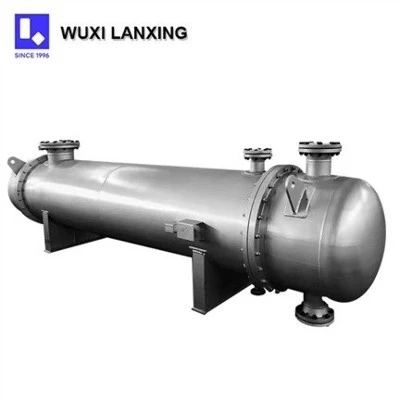
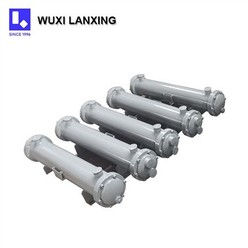
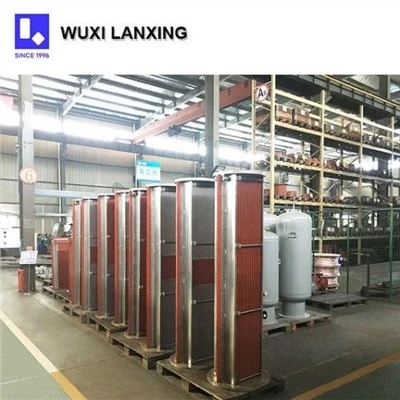
Shell and tube heat exchanger for gas are industrial devices specifically designed for heat exchange between gaseous media. They achieve efficient heat transfer through indirect contact between the tube bundle and the shell.
Send InquiryChat NowProduct Introduction
A shell and tube heat exchanger for gas is a heat exchange device where one gas fluid flows inside the tubes and another fluid flows in the shell side, exchanging heat to achieve heating or cooling purposes.

Structure
Shell: The shell is a cylindrical pressure vessel, typically made of carbon or stainless steel, housing the tube bundle. It withstands fluid pressure, optimizes fluid distribution, and minimizes pressure loss.
Tube Bundle: The tube bundle consists of multiple straight or U-shaped tubes, usually 19–25 mm in diameter and 4–6 meters in length (up to 9 meters for larger equipment). The arrangement is typically equilateral triangle or square; the former enhances turbulence, while the latter facilitates cleaning.
Tube Sheet: The tube sheet connects the tube bundle and the shell. Tubes are fixed by expansion joints or welding to ensure a tight seal. In a floating head design, one end can float freely to reduce thermal stress.
Baffle: Baffles are bow-shaped or segmented components inside the shell that force the shell-side fluid to scour the tube bundle, increasing turbulence and improving heat exchange efficiency by 20%–30%.
Manifolds: Located at both ends of the tube bundle, manifolds distribute and collect fluid from the tube side. Some are removable for easier cleaning.
Product Customization
Material Selection: Stainless Steel / Titanium Alloy / Carbon Steel / Aluminum Alloy
Tube Diameter: 1" / 2" / 3" / 4"
Pressure Rating: 10MPa / 15MPa / 20MPa / Custom
Temperature Range: 200℃ / 250℃ / 350℃ / Custom
Surface Treatment: Pickling Passivation / Mechanical Polishing
Connection Type: Flanged Connection / Welded Connection / Threaded Connection
Number of Tube Bundles: Single Tube Bundle / Double Tube Bundle / Triple Tube Bundle / Custom

Application Areas
Chemical Industry: Used for reactor cooling, steam heating, and heat exchange of various gases.
Petroleum Industry: Used for heat recovery and utilization during oil-gas separation and refining processes.
Power Plants: Used for gas cooling and heat recovery to improve energy efficiency.
HVAC Systems: Used for heat exchange between air and liquids in large-scale air conditioning and ventilation systems.
Key Considerations for Selection
Flow Rate Control: Avoid excessive flow rates that could cause vibration. Patented cases show that the rotational speed needs to be controlled between 95-252 r/min.
Anti-clogging: Increase the pipe spacing when the gas carries particulate matter.
Material Selection: Titanium alloy or special stainless steel is required for corrosive gases.
Sealing: High-pressure gases must use a double-sealed structure.
FAQ
Q: How to effectively increase the heat transfer coefficient of gas in a shell and tube heat exchanger?
A: The heat transfer can be enhanced by reinforcing the inner surface of the tubes (such as using internal turbulence promoters), increasing the number of baffles, or using finned tubes to enlarge the effective heat exchange area and turbulence.
Q: Can energy recovery requirements be considered when customizing a gas heat exchanger?
A: Yes, we can design the heat exchanger as an energy recovery unit, using exhaust heat for preheating intake air, heating, or generating steam, thus achieving integrated energy utilization.
Q: Does your company have any successful cases or industry experience in gas heat exchangers that can be referenced?
A: Yes, we have extensive successful project experience and cases in industries such as petrochemical, natural gas processing, and air separation, which we can share with you.
Q: How can payment methods and installment payment policies be negotiated during the purchasing process?
A: The common payment method is 30% prepayment, 60% paid before shipment, and 10% as a warranty deposit. The installment payment ratio and schedule can be flexibly adjusted based on the order amount and cooperation history.
Q: How is gas tightness ensured in welds of gas heat exchangers, especially for equipment used with high-pressure gases?
A: All critical welds are welded with full penetration and subjected to 100% radiographic inspection. A helium leak test or other high-sensitivity leak tests will be conducted to ensure gas tightness.
Hot Tags: shell and tube heat exchanger for gas, China shell and tube heat exchanger for gas manufacturers, suppliers, factory, furnace air exchanger, fire heat exchanger, storage type heat exchanger, shell and coil heat exchanger, brazed aluminum plate fin heat exchangers, armstrong shell and tube heat exchanger
Professional manufacturer of pressure vessels and heat exchangers, Wuxi LanXing Pressure Vessel Co., Ltd. is located in Wuxi city, eastern China.


Tel: +86-510-88156399
Mob1: +8615852701809
Mob2: +8615951506886
Mob3: +8615952470757
Email: Zyc@cn-lxjt.com
Add: No.19, Feng Er Road, Xinwu District, Wuxi City, Jiangsu Province, China
Copyright © Wuxi Lanxing Pressure Vessel Co., Ltd. All Rights Reserved.Privacy Policy