+86-510-88156399



U tube heat exchanger is a kind of tube and shell heat exchanger, belongs to the petroleum and chemical equipments.
Send InquiryChat NowWhat Is U Tube Heat Exchanger?
U tube heat exchanger is a kind of tube and shell heat exchanger, belongs to the petroleum and chemical equipments. It comprises a bundle of tubes bent into a u-shape, typically housed within a shell.The design facilitates the exchange of heat between two fluids, ensuring efficient energy transfer without direct contact between them.
Efficient heat transfer: The unique design of U tube heat exchanger allows for efficient heat transfer, resulting in improved energy efficiency and cost savings.
Versatility: U tube heat exchangers are suitable for a wide range of applications, including HVAC systems, industrial processes, and more.
Compact design: The compact design of U tube heat exchanger makes them ideal for installations where space is limited.
Durability: Constructed from high-quality materials, our U tube heat exchangers are built to withstand harsh operating conditions and provide long-lasting performance.

Heat Exchanger for Air Compressor
We produce Heat Exchanger For Air Compressor in strict accordance with industry standards and processes. Our company has a strict production management system to ensure the quality of each product. We support all kinds of things, welcome to consult.

Our company produces and supplies Air Compressor Heat Exchanger. The equipment is developed by using quality-inspected raw materials according to industry specifications and using advanced technology.

Fixed Tube Sheet Heat Exchanger
Fixed Tube Sheet Heat Exchanges refers to a shell-and-tube heat exchanger in which the tube sheets at both ends of the tube bundle are fixedly connected to the shell by welding. After the tube sheet is welded to the shell, it can also be used as a flange, and it is connected with the flange of the tube box by bolts.

Tube Bundle Heat Exchangers are a typical heat exchange equipment that allows two fluids with different temperatures to exchange heat. Through this equipment, one fluid can be cooled and the other fluid can be heated to meet their respective needs.

Double Tube Heat Exchanger is used for evaporation, heating, condensation, and cooling processes. It is a necessary equipment for heat exchange and transfer in the production process.
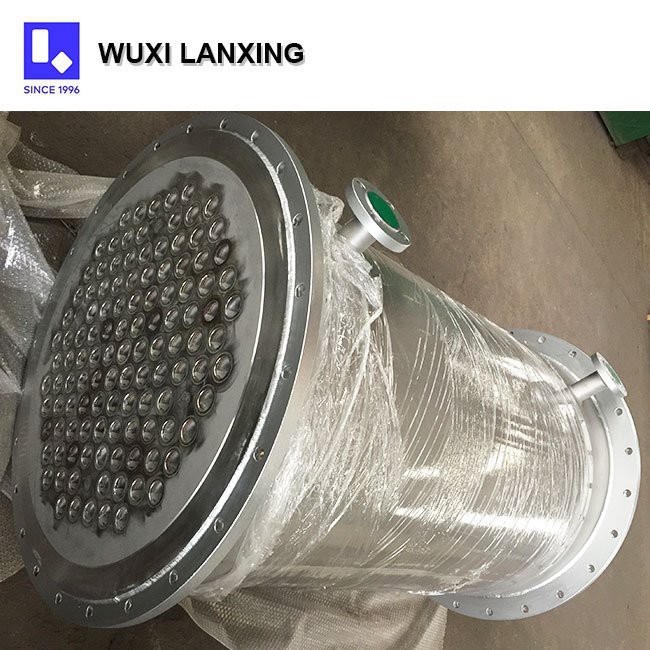
Titanium Shell and Tube Heat Exchanger
Titanium Shell And Tube Heat Exchanger is a heat exchange device made of high-quality titanium tubes that transfers part of the heat of the hot fluid to the cold fluid.

Stainless Steel Heat Exchanger Shell Tube
Stainless Steel Heat Exchanger Shell Tube is a heat exchanger made of stainless steel material. It has very good oxidation resistance, safety and hygiene, and is widely used in food, medicine, heating, domestic water, air conditioning backwater and other fields.

Steel Shell and Tube Heat Exchanger
Steel Shell And Tube Heat Exchanger is one of our company's best-selling products. We have modern equipment and management to ensure product quality. We have the ability to produce products that meet ASME, PED, CE, JIS, IBR, MOM, DOSH, GB and other standards.

Shell and Tube Heat Exchanger Used for Oil Cooling
Shell And Tube Heat Exchanger Used For Oil Cooling adopts corrosion-resistant high-efficiency heat transfer tubes, which are arranged closely and reasonably to strengthen the heat transfer coefficient, effectively improve the heat transfer effect and effectively extend the service life.
Our factory
Our factory covers 15,000 square meters area including modern workshops, testing center of flaw detection, physical and chemical labs, welding labs and the office building.
Professional team
With 130 professional staff, we are dedicated to providing the high efficient, quality products and excellent services.
Production equipment
Various Welding Machines, Roller, Shearer, Bending Machine, X Ray Detection Machines, Traveling Cranes.
Rich experience
Operation experience of professional foreign trade export projects.
Chemical processing: Used in distillation columns, chemical reactors, and other units where maintaining ideal reaction conditions depends on effective heat exchange.
Petrochemical industry: Used in the heating, cooling, and condensing of operations involving hydrocarbons and other chemicals in refineries and petrochemical facilities.
Power generation: Used in power plants for various purposes such condensate systems, cooling turbine generators, and other heat exchange procedures necessary for the production of energy.
HVAC systems: Used in big buildings and industrial facilities for temperature control and heat recovery, HVAC systems stand for heating, ventilation, and air conditioning.
Food and beverage: Used in the manufacturing of beverages and food processing for processes like heat exchange and pasteurisation that call for exact temperature control.
Pharmaceutical industry: Used in production operations for pharmaceutical products where precise and hygienic heat transfer is essential to product quality and safety.
Components of U Tube Heat Exchanger
Tubes:
The heart of the u-tube heat exchanger, these tubes constitute the primary components for heat exchange. Constructed from materials tailored to withstand corrosive environments and high temperatures, they ensure prolonged operational durability.
Shell:
Surrounding the tube bundle, the shell provides structural support and containment for the fluid streams. Its design varies depending on factors like pressure, temperature, and fluid properties, with options ranging from cylindrical to rectangular configurations.
Tube sheets:
Positioned at both ends of the tube bundle, tube sheets serve as crucial interfaces, securing the tubes in place while facilitating fluid ingress and egress. Their robust construction is paramount for maintaining structural integrity under operational conditions.
Headers:
These components connect the tubes to the inlet and outlet piping, enabling seamless integration within the larger system. Headers play an important role in ensuring uniform flow distribution and minimising pressure drop across the heat exchanger.
Baffles:
Strategically placed within the shell, baffles optimise fluid flow patterns to maximise turbulence and enhance heat transfer efficiency. Their geometric configuration and spacing are designed to mitigate flow stagnation and promote uniform distribution.
Support structures:
Integral to the overall stability of the u-tube heat exchanger, support structures provide mechanical reinforcement and alignment for the tube bundle and other components. Proper installation and maintenance of these structures are imperative for long-term reliability.
Thermal insulation:
External insulation layers mitigate heat loss and minimise thermal gradients, optimising energy efficiency and operational performance. Insulation materials are selected based on thermal conductivity, environmental compatibility, and regulatory compliance.
Access ports:
Incorporated at strategic locations, access ports facilitate routine inspection, maintenance, and cleaning operations. Their design considerations encompass factors like size, location, and sealing mechanisms to ensure operational convenience and safety.

Cleaning: It is important to clean your heat exchanger regularly to remove any dirt, scale or debris that may have accumulated on the surface of the tubes. This buildup blocks heat transfer and reduces the efficiency of the heat exchanger. Use chemical cleaning solutions or mechanical cleaning tools to remove any buildup.
Inspection: It is important to regularly inspect the U-tube heat exchanger to detect damage or leaks in the tubes, gaskets or housing. Leaks or damage can result in fluid loss and reduced efficiency.
Replace pipes: If pipes are damaged, corroded, or leaking, they should be replaced immediately. Replacing pipes requires skilled technicians and specialized equipment to ensure the new pipes are installed correctly.
Gasket replacement: The gasket between the tube bundle and housing may wear over time and require replacement. Make sure the new gasket is made of the right material and is the right size for the heat exchanger.
Fluid flow and pressure: Regularly check fluid flow and pressure to ensure the heat exchanger is operating at the proper flow rate and pressure. A drop in flow rate or pressure may indicate a problem with the heat exchanger.
Regular maintenance: Arrange for qualified technicians to regularly maintain the U-tube heat exchanger to ensure that the heat exchanger operates efficiently. They can perform a more thorough inspection and identify any potential issues that may require attention.
U-tube heat exchangers differ from other shell-and-tube variants primarily due to their U-shaped tube configuration, leading to the following distinctions:
Tube structure
U-tube heat exchangers feature tubes bent into a U-shape, allowing fluid inlet and outlet on opposite sides of the same end, enabling free expansion and contraction to address thermal compensation requirements.
Flow dynamics
Both internal and external fluids flow in parallel and counterflow within U-tube heat exchangers.


Connection methods
Double-row tube sheets are commonly connected using a liquid collecting shell, while a condensing oil shell prevents gas (liquid) leakage.
Port arrangement
Condensing oil shells are equipped with empty and cleaning ports for the timely discharge of leaked gas (liquid).
Fluid circulation:
U-tube heat exchangers operate on a simple yet effective principle of transferring heat between two fluid streams without direct contact. One fluid, known as the process fluid, flows through the tubes, while the other, often a utility fluid like water or air, circulates the tubes within the shell. This arrangement allows for efficient heat exchange while maintaining a separation between the two fluids, crucial for preventing contamination or undesired chemical reactions.
Heat transfer mechanism:
Heat transfer in U-tube heat exchangers occurs primarily through conduction across the walls of the tubes. As the hot process fluid flows through the tubes, it releases thermal energy to the cooler utility fluid flowing around them. The temperature difference between the two fluids drives this heat transfer process, with the heat flowing from the hotter fluid to the cooler one. This mechanism ensures efficient energy utilisation and optimal temperature control in industrial processes.
Counterflow or parallel flow arrangement:
U-tube heat exchangers can be configured for counterflow or parallel flow operation, depending on the specific requirements of the application. In counterflow, the process fluid and utility fluid flow in opposite directions, maximising the temperature differential across the length of the heat exchanger. This configuration offers superior heat transfer efficiency and is commonly used in applications where achieving maximum temperature differences is essential, such as in condensers and evaporators. On the other hand, parallel flow involves both fluids moving in the same direction, which is beneficial for applications where maintaining uniform temperatures is critical, such as in preheating processes.
Turbulence generation:
Turbulence is crucial in enhancing heat transfer efficiency within u-tube heat exchangers. The U-shaped configuration of the tubes induces turbulence in the fluid flow, disrupting the formation of boundary layers and promoting better mixing between the fluids. This turbulence increases the convective heat transfer coefficient, leading to higher rates of heat exchange and improved overall performance of the heat exchanger. By maximising turbulence, the heat exchangers can achieve greater thermal efficiency compared to other designs.
Continuous operation:
U-tube heat exchangers are designed for continuous operation, making them suitable for applications requiring steady heat exchange processes. Whether used for heating, cooling, or condensing purposes, these heat exchangers can maintain consistent performance over extended periods, ensuring uninterrupted operation of industrial systems.
Professional manufacturer of pressure vessels and heat exchangers, Wuxi LanXing Pressure Vessel Co., Ltd. is located in Wuxi city, eastern China. Our factory covers 15,000 square meters area including modern workshops, testing center of flaw detection, physical and chemical labs, welding labs and the office building. With 130 professional staff, we are dedicated to providing the high efficient, quality products and excellent services.


Hot Tags: u tube heat exchanger, China u tube heat exchanger manufacturers, suppliers, factory, tantalum heat exchanger, ormandy rycroft plate heat exchangers, lube oil cooler heat exchanger, heat transfer shell and tube heat exchanger, radiator heat exchanger, heat interchanger
Professional manufacturer of pressure vessels and heat exchangers, Wuxi LanXing Pressure Vessel Co., Ltd. is located in Wuxi city, eastern China.


Tel: +86-510-88156399
Mob1: +8615852701809
Mob2: +8615951506886
Mob3: +8615952470757
Email: Zyc@cn-lxjt.com
Add: No.19, Feng Er Road, Xinwu District, Wuxi City, Jiangsu Province, China
Copyright © Wuxi Lanxing Pressure Vessel Co., Ltd. All Rights Reserved.Privacy Policy