
 +86-510-88156399



I. Signs of repair needing to be detected through periodic inspections
Periodic inspections of pressure vessels are crucial for identifying whether repair is required. According to the "Rules for Periodic Inspection of Pressure Vessels," the following situations indicate that a vessel needs repair:
1. Excessive defects on the surface or internal structure:
Cracks, lack of fusion, incomplete penetration, and other hazardous defects, regardless of size, should be addressed.
Surface undercut depth exceeding 0.5mm, or continuous length exceeding 100mm, requires repair welding.
If the same weld area has been repaired more than twice and the defect is found again, an assessment should be made to determine whether complete replacement or deep repair is necessary.
2. Wall thickness reduction exceeding allowable limits:
When uniform or localized corrosion causes the measured wall thickness to be less than the design calculated thickness, a strength check should be performed.
If the remaining strength does not meet the operating pressure requirements, repair or reduced pressure operation is mandatory.
3. Safety Status Rating: Level 3 or Above:
Level 3: Exceeds standards in defective parts; repairs are required before continued use. The next inspection cycle is shortened to 3 years.
Level 4: Severe material deterioration; limited to monitoring use only; cumulative use not exceeding 3 years; a repair plan must be arranged during this period.
Level 5: Through-cracks and severe deformation; must be scrapped or completely repaired before reassessment.
✅ Note: The "lowest-needle principle" applies during inspection; any defect in a critical component determines the overall machine level. For example, if the main body is Level 2 but the weld seam of the connecting pipe has cracks, the entire machine is classified as Level 4.
II. Abnormal Phenomena Found During Operation
During daily operation, if the following abnormalities occur, the machine should be stopped immediately for inspection and to determine if repair is necessary:
1. Leakage:
Leakage of media, especially flammable, explosive, or toxic media, occurs at the flange sealing surface, weld seam, or opening in the connecting pipe. The cause must be identified and repaired.
2. Abnormal Vibration or Noise:
Friction between the container and adjacent pipes, loose supports, or foundation subsidence may cause fatigue damage, requiring inspection of structural integrity.
3. Localized Overheating or Bulging:
Localized overheating on the outer wall (detectable via infrared thermography) may indicate detachment of the internal insulation layer or thermal damage to the material, requiring further flaw detection.
Bulging or swelling deformation indicates plastic deformation of the material, a serious defect requiring repair or replacement.
4. Frequent Safety Accessory Activation:
Frequent tripping of safety valves or abnormal fluctuations in pressure gauges may reflect internal pressure loss or structural instability, requiring investigation of inherent defects.
III. Determining Repair Necessity Based on Defect Type Different defects have varying degrees of impact on safety, and repair decisions should be differentiated accordingly:
1. Defects Requiring Repair:
Cracks (surface or internal): The most dangerous defect, easily leading to brittle fracture.
Incomplete Penetration/Incomplete Fusion: Affects the weld's load-bearing capacity and easily propagates into penetrating defects.
Corrosion pits or patched areas exceeding half the wall thickness in depth: Significantly reduced structural strength, requiring welding repair or replacement.
Excessive misalignment and sharp edges in major pressure-bearing components: Cause stress concentration, easily leading to fatigue cracks during long-term operation.
2. Monitorable Defects: Scattered pitting corrosion, less than half the calculated wall thickness in depth, with no signs of crack propagation, can be temporarily left untreated.
Manufacturing-related buried defects (such as porosity and slag inclusions), if unchanged during use, can be monitored for continued use.
Minor undercuts and craters, not exceeding limits and showing no tendency to propagate, can be included in the next inspection.
3. Situations Prohibited from Repair or Should Be Scrapped: Fixed pressure vessels cannot be converted into mobile vessels; such "repairs" are illegal.
Class 5 vessels with severe material deterioration (such as graphitization, creep damage) and cracks penetrating the vessel wall should, in principle, be scrapped.
Repair is meaningless if multiple repair failures or severe degradation of the weld heat-affected zone performance.
IV. Repair Triggering Conditions Stipulated by Regulations and Standards
According to the *Safety Technical Supervision Regulations for Stationary Pressure Vessels* (TSG 21-2016) and related guidelines, repairs and supervisory inspections must be carried out in the following situations:
Replacing, straightening, or patching major pressure-bearing components.
The repair depth of butt welds exceeds 1/2 of the measured thickness.
Changes in operating parameters, contained media, or intended use, requiring re-verification of strength.
Major repairs requiring post-weld heat treatment or pressure testing after repair.
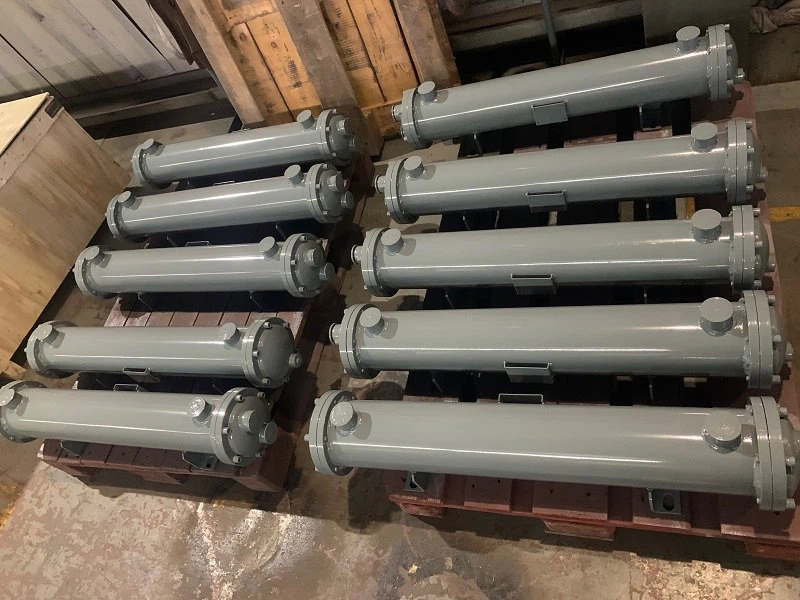
Professional manufacturer of pressure vessels and heat exchangers, Wuxi LanXing Pressure Vessel Co., Ltd. is located in Wuxi city, eastern China.


Tel: +86-510-88156399
Mob1: +8615852701809
Mob2: +8615951506886
Mob3: +8615952470757
Email: Zyc@cn-lxjt.com
Add: No.19, Feng Er Road, Xinwu District, Wuxi City, Jiangsu Province, China
Copyright © Wuxi Lanxing Pressure Vessel Co., Ltd. All Rights Reserved.Privacy Policy


