
 +86-510-88156399



Designing a reliable level control system for a shell and tube heat exchanger is crucial for ensuring its efficient and safe operation. As a shell and tube type heat exchanger supplier, I've seen firsthand how a well - designed level control system can make a huge difference in the performance of these heat exchangers. In this blog, I'll share some tips on how to design such a system.
Understanding the Basics of Shell and Tube Heat Exchangers
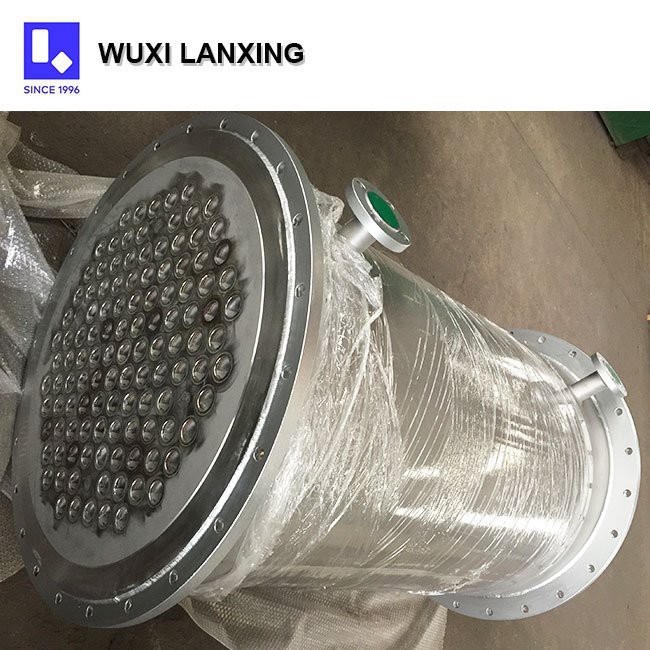
Before diving into the level control system, let's quickly go over what shell and tube heat exchangers are. They consist of a series of tubes enclosed in a shell. One fluid flows through the tubes, and the other flows outside the tubes within the shell. Heat is transferred between the two fluids through the tube walls.
We offer a variety of shell and tube heat exchangers, including the Water Cooled Evaporator Shell and Tube Heat Exchanger, Steel Shell and Tube Heat Exchanger, and Titanium Shell and Tube Heat Exchanger. Each type has its own unique features and applications, but all of them require a proper level control system.
Why is Level Control Important?
Maintaining the correct fluid level in a shell and tube heat exchanger is essential for several reasons. Firstly, if the fluid level is too low, the tubes may not be fully submerged. This can lead to overheating of the tubes, which may cause damage to the heat exchanger and reduce its efficiency. On the other hand, if the fluid level is too high, it can cause flooding, which can also affect the heat transfer process and potentially damage the equipment.
Key Factors in Designing a Level Control System
1. Sensor Selection
The first step in designing a level control system is choosing the right sensors. There are several types of sensors available, such as float sensors, ultrasonic sensors, and capacitance sensors.
Float sensors are relatively simple and cost - effective. They work by using a float that rises and falls with the fluid level. When the float reaches a certain position, it activates a switch. However, they may not be suitable for applications where the fluid is viscous or contains debris, as the float may get stuck.
Ultrasonic sensors use sound waves to measure the distance to the fluid surface. They are non - contact sensors, which means they don't come into direct contact with the fluid. This makes them suitable for applications where the fluid is corrosive or dirty. But they can be affected by factors like foam on the fluid surface or changes in the temperature and pressure of the surrounding environment.

Capacitance sensors measure the change in capacitance between two electrodes. They can be used for a wide range of fluids and are relatively accurate. However, they may require calibration and can be affected by the presence of conductive materials in the fluid.
2. Controller Design
Once you've selected the sensors, you need to design a controller that will receive the signals from the sensors and take appropriate actions. The controller can be a simple on - off controller or a more sophisticated proportional - integral - derivative (PID) controller.
An on - off controller turns the fluid inlet or outlet valves on or off based on a setpoint. For example, if the fluid level drops below a certain level, the controller will open the inlet valve to let more fluid in. When the level reaches the setpoint, it will close the valve. This type of controller is easy to implement but may cause some fluctuations in the fluid level.
A PID controller, on the other hand, continuously adjusts the valve position based on the difference between the actual fluid level and the setpoint, as well as the rate of change of the level. This results in a more stable fluid level control but requires more complex programming and tuning.
3. Valve Selection
The valves used in the level control system are also crucial. You need to choose valves that can handle the flow rate and pressure of the fluid in the heat exchanger. Globe valves are commonly used for level control as they can provide precise flow control. However, they may have a relatively high pressure drop. Ball valves, on the other hand, have a low pressure drop but may not provide as precise control as globe valves.
4. Safety Features
In addition to the basic components of the level control system, it's important to include safety features. For example, you can install a high - level alarm and a low - level alarm. The high - level alarm will alert the operator if the fluid level exceeds a certain limit, and the low - level alarm will do the same if the level drops too low. You can also include a failsafe mechanism, such as a bypass valve that opens in case of a controller failure to prevent damage to the heat exchanger.
System Integration and Testing
After designing the individual components of the level control system, you need to integrate them into the overall heat exchanger system. Make sure that all the connections are secure and that the sensors, controller, and valves are working together properly.
Once the system is integrated, it's important to test it thoroughly. You can perform a series of tests, such as filling the heat exchanger to different levels and observing how the control system responds. Check for any leaks, abnormal noises, or malfunctions during the testing process.
Conclusion
Designing a reliable level control system for a shell and tube heat exchanger is a complex but essential task. By carefully selecting the sensors, designing the controller, choosing the right valves, and including safety features, you can ensure that the heat exchanger operates efficiently and safely.
If you're in the market for a shell and tube heat exchanger or need help with designing a level control system, don't hesitate to reach out. We're here to provide you with the best solutions for your specific needs. Contact us to start a procurement discussion and find out how we can assist you in optimizing your heat exchange processes.
References
- Incropera, F. P., & DeWitt, D. P. (2002). Fundamentals of Heat and Mass Transfer. Wiley.
- Cengel, Y. A., & Ghajar, A. J. (2015). Heat and Mass Transfer: Fundamentals and Applications. McGraw - Hill.


