
 +86-510-88156399



As a supplier of Fixed Tube Sheet Heat Exchangers, I understand the importance of preventing vibration in these essential pieces of equipment. Vibration in a fixed tube sheet heat exchanger can lead to numerous issues, including tube failures, reduced heat transfer efficiency, and increased maintenance costs. In this blog, I will share some effective strategies to prevent vibration in a fixed tube sheet heat exchanger.
Understanding the Causes of Vibration in Fixed Tube Sheet Heat Exchangers
Before we delve into prevention methods, it's crucial to understand what causes vibration in the first place. There are primarily two types of forces that can induce vibration in a heat exchanger: fluid - induced forces and mechanical forces.
Fluid - induced forces are a common cause of vibration. When fluid flows through the shell and tubes of the heat exchanger, it can create pressure fluctuations. If the flow velocity is high enough, these pressure fluctuations can cause the tubes to vibrate. This can happen due to phenomena such as vortex shedding, turbulent buffeting, and acoustic resonance.
Mechanical forces, on the other hand, can result from external sources like pumps, compressors, or other equipment connected to the heat exchanger. Misaligned or unbalanced rotating machinery can transmit vibrations to the heat exchanger, leading to potential damage over time.
Strategies to Prevent Vibration
1. Proper Design and Sizing
The design and sizing of a fixed tube sheet heat exchanger play a vital role in preventing vibration. When designing the heat exchanger, it's essential to consider the fluid properties, flow rates, and operating conditions. A well - designed heat exchanger will have an appropriate tube pitch and layout to minimize the risk of fluid - induced vibration.
For example, increasing the tube pitch can reduce the likelihood of vortex shedding. A larger tube pitch allows more space for the fluid to flow between the tubes, reducing the pressure fluctuations that can lead to vibration. Additionally, the number of tubes and the shell diameter should be carefully selected to ensure that the flow velocities are within acceptable limits.
2. Flow Velocity Control
Controlling the flow velocity of the fluids in the heat exchanger is another effective way to prevent vibration. High flow velocities increase the chances of fluid - induced vibration. By keeping the flow velocities within the recommended range, the risk of vibration can be significantly reduced.
This can be achieved through proper pump selection and flow control valves. The pumps should be sized to provide the required flow rate without exceeding the maximum allowable velocity in the heat exchanger. Flow control valves can be used to adjust the flow rate as needed, ensuring that the operating conditions remain stable.
3. Baffle Design and Placement
Baffles are used in shell - and - tube heat exchangers to direct the flow of the shell - side fluid and enhance heat transfer. However, improper baffle design and placement can also contribute to vibration.
The baffle spacing should be optimized to avoid creating large pressure differentials that can cause vibration. A smaller baffle spacing can increase the flow resistance and reduce the likelihood of vortex shedding. Additionally, the baffle shape and orientation should be designed to minimize the impact of the fluid flow on the tubes.
4. Tube Support Structures
Strong and well - designed tube support structures are essential for preventing tube vibration. Tube supports, such as support plates and rods, help to keep the tubes in place and reduce the amplitude of vibration.
The tube support structures should be designed to withstand the forces exerted on the tubes during operation. They should be made of materials with sufficient strength and stiffness to prevent deformation. Regular inspection of the tube support structures is also necessary to ensure that they remain in good condition.
5. Isolation from External Sources of Vibration
As mentioned earlier, mechanical forces from external equipment can cause vibration in the heat exchanger. To prevent this, the heat exchanger should be properly isolated from other vibrating equipment.
This can be achieved through the use of vibration isolation mounts or flexible connectors. Vibration isolation mounts absorb and dampen the vibrations transmitted from external sources, reducing the impact on the heat exchanger. Flexible connectors, such as expansion joints, can also help to isolate the heat exchanger by allowing for some movement without transmitting vibrations.
The Role of Material Selection in Preventing Vibration
The choice of materials for the heat exchanger can also have an impact on vibration prevention. For example, using materials with high stiffness and low density can reduce the susceptibility of the tubes to vibration.
Titanium is a popular material for heat exchangers due to its excellent corrosion resistance and high strength - to - weight ratio. You can learn more about Titanium Shell and Tube Heat Exchanger. Silicon carbide is another material that offers high thermal conductivity and good mechanical properties. Check out Silicon Carbide Shell and Tube Heat Exchanger for more information.
In addition to the tube materials, the shell and other components of the heat exchanger should also be made of suitable materials. The overall material selection should be based on the specific operating conditions and requirements of the heat exchanger.
Impact of Vibration Prevention on Heat Exchanger Performance
Preventing vibration in a fixed tube sheet heat exchanger has several benefits for its performance. Firstly, it helps to maintain the structural integrity of the tubes and other components. By reducing the risk of tube failures, the heat exchanger can operate more reliably and require less frequent maintenance.
Secondly, vibration prevention can improve the heat transfer efficiency of the heat exchanger. When the tubes vibrate, it can disrupt the boundary layer of the fluid, reducing the effectiveness of heat transfer. By keeping the tubes stable, the heat transfer process can occur more efficiently.
Finally, preventing vibration can extend the service life of the heat exchanger. This reduces the long - term costs associated with the heat exchanger, including replacement and maintenance expenses.
Application - Specific Considerations
In different applications, the requirements for vibration prevention in fixed tube sheet heat exchangers may vary. For example, in chemical processes, where the heat exchanger may be exposed to corrosive fluids, the material selection becomes even more critical. A Chemical Process Heat Exchanger needs to be designed to withstand the harsh chemical environment while also preventing vibration.
In power generation applications, the heat exchanger may be subject to high - temperature and high - pressure conditions. The design and construction of the heat exchanger should take these factors into account to ensure reliable operation and vibration prevention.
Conclusion
Preventing vibration in a fixed tube sheet heat exchanger is a complex but essential task. By understanding the causes of vibration and implementing the strategies discussed above, such as proper design and sizing, flow velocity control, baffle design, tube support structures, and isolation from external sources of vibration, we can significantly reduce the risk of vibration - related issues.
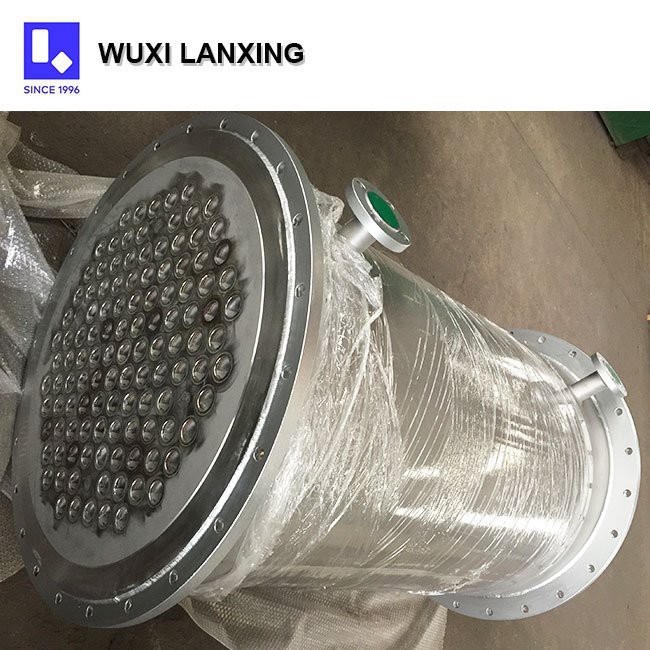

The choice of materials also plays a crucial role in vibration prevention, and different applications may require specific considerations. As a supplier of Fixed Tube Sheet Heat Exchangers, we are committed to providing high - quality products that are designed to prevent vibration and ensure optimal performance.
If you are in the market for a fixed tube sheet heat exchanger or have any questions about vibration prevention, we encourage you to contact us for further discussion and procurement. Our team of experts is ready to assist you in finding the best solution for your specific needs.


