
 +86-510-88156399




Flow rate requirements play a crucial role in the performance and efficiency of an Alloy Steel Tubular Heat Exchanger. As a supplier of these heat exchangers, understanding these requirements is essential to ensure that our customers receive the best possible product for their specific applications. In this blog, we will delve into the various factors that influence the flow rate requirements for an Alloy Steel Tubular Heat Exchanger and provide insights to help you make informed decisions.
Understanding the Basics of Flow Rate in Heat Exchangers
Flow rate refers to the volume of fluid that passes through a heat exchanger per unit of time. It is typically measured in cubic meters per hour (m³/h) or gallons per minute (GPM). In the context of an Alloy Steel Tubular Heat Exchanger, the flow rate of both the hot and cold fluids is a critical parameter. The flow rate affects the heat transfer rate, pressure drop, and overall efficiency of the heat exchanger.
A higher flow rate generally leads to a higher heat transfer rate because it increases the contact between the hot and cold fluids. However, it also results in a higher pressure drop across the heat exchanger. Conversely, a lower flow rate reduces the pressure drop but may also decrease the heat transfer rate. Therefore, finding the optimal flow rate is a balance between achieving efficient heat transfer and minimizing pressure drop.
Factors Influencing Flow Rate Requirements
1. Heat Transfer Requirements
The primary purpose of a heat exchanger is to transfer heat from one fluid to another. The amount of heat that needs to be transferred, known as the heat load, is a key factor in determining the flow rate requirements. The heat load depends on the temperature difference between the hot and cold fluids, the specific heat capacity of the fluids, and the mass flow rate of the fluids.
For example, if a process requires a large amount of heat to be transferred from a hot fluid to a cold fluid, a higher flow rate of both fluids may be necessary to achieve the desired heat transfer rate. On the other hand, if the heat load is relatively small, a lower flow rate may be sufficient.

2. Fluid Properties
The properties of the fluids used in the heat exchanger, such as density, viscosity, and thermal conductivity, also affect the flow rate requirements. Fluids with higher viscosities require more energy to flow through the heat exchanger, which may result in a lower flow rate. Similarly, fluids with lower thermal conductivities may require a higher flow rate to achieve the same heat transfer rate.
For instance, if a heat exchanger is used to cool a viscous oil, a higher flow rate may be needed to ensure efficient heat transfer. In contrast, a less viscous fluid like water may require a lower flow rate.
3. Tube Size and Configuration
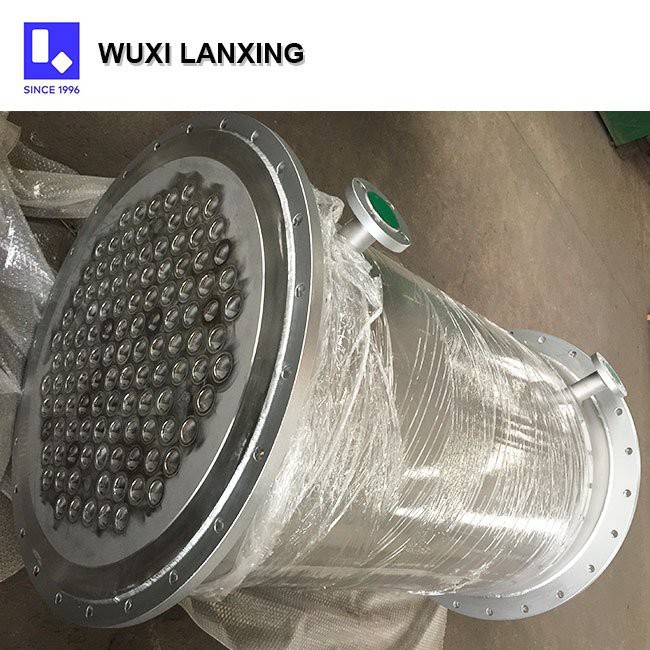
The size and configuration of the tubes in the heat exchanger have a significant impact on the flow rate requirements. Smaller tubes generally have a higher surface area to volume ratio, which can increase the heat transfer rate. However, they also result in a higher pressure drop. Larger tubes, on the other hand, have a lower pressure drop but may have a lower heat transfer rate.
The tube configuration, such as the number of tubes, tube pitch, and tube arrangement, also affects the flow rate. A heat exchanger with a larger number of tubes may allow for a higher flow rate, but it may also increase the pressure drop.
4. Operating Conditions
The operating conditions of the heat exchanger, such as the inlet and outlet temperatures, pressure, and flow direction, also influence the flow rate requirements. For example, if the inlet temperature of the hot fluid is higher, a higher flow rate of the cold fluid may be needed to achieve the desired outlet temperature.
Calculating Flow Rate Requirements
Calculating the flow rate requirements for an Alloy Steel Tubular Heat Exchanger involves a complex process that takes into account the factors mentioned above. The following steps can be used as a general guide:
Step 1: Determine the Heat Load
The heat load can be calculated using the following formula:
Q = m × Cp × ΔT
Where:
Q = Heat load (kW)
m = Mass flow rate of the fluid (kg/s)
Cp = Specific heat capacity of the fluid (kJ/kg·K)
ΔT = Temperature difference between the inlet and outlet of the fluid (K)
Step 2: Calculate the Required Flow Rate
Once the heat load is determined, the required flow rate can be calculated using the following formula:
m = Q / (Cp × ΔT)
Where:
m = Mass flow rate of the fluid (kg/s)
Q = Heat load (kW)
Cp = Specific heat capacity of the fluid (kJ/kg·K)
ΔT = Temperature difference between the inlet and outlet of the fluid (K)
Step 3: Consider the Pressure Drop
The pressure drop across the heat exchanger needs to be considered to ensure that the flow rate is within the acceptable range. The pressure drop can be calculated using the Darcy-Weisbach equation or other empirical formulas.
Importance of Meeting Flow Rate Requirements
Meeting the flow rate requirements is crucial for the proper functioning and efficiency of an Alloy Steel Tubular Heat Exchanger. If the flow rate is too low, the heat transfer rate may be insufficient, resulting in poor performance and increased energy consumption. On the other hand, if the flow rate is too high, the pressure drop may be excessive, leading to increased pumping costs and potential damage to the heat exchanger.
In addition, meeting the flow rate requirements can also extend the lifespan of the heat exchanger. Proper flow rates ensure that the fluids are evenly distributed throughout the heat exchanger, reducing the risk of fouling and corrosion.
Other Types of Heat Exchangers
In addition to Alloy Steel Tubular Heat Exchangers, there are other types of heat exchangers available in the market. For example, Titanium Shell and Tube Heat Exchanger is known for its excellent corrosion resistance and high heat transfer efficiency. Copper Brazed Plate Heat Exchanger is compact and offers a high surface area for heat transfer. Industrial Condenser is commonly used in industrial applications to condense vapors.
Contact Us for Procurement
If you are in the market for an Alloy Steel Tubular Heat Exchanger or any other type of heat exchanger, we are here to help. Our team of experts can assist you in determining the flow rate requirements and selecting the right heat exchanger for your specific needs. Contact us today to start the procurement process and discuss how we can meet your heat transfer requirements.


