+86-510-88156399



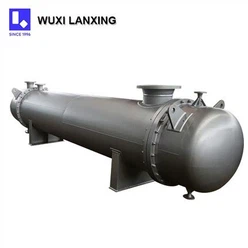
Stainless steel filters are industrial-grade filtration equipment made from high-quality stainless steel materials (such as 304 and 316L). Their core design philosophy focuses on durability, corrosion resistance, and reusability, perfectly solving the problems of high consumable costs, easy breakage, and poor chemical corrosion resistance of traditional filter cartridges.
Send InquiryChat NowProduct Description
Stainless steel filters are industrial-grade filtration equipment made from high-quality stainless steel materials (such as 304 and 316L). Their core design philosophy focuses on durability, corrosion resistance, and reusability, perfectly solving the problems of high consumable costs, easy breakage, and poor chemical corrosion resistance of traditional filter cartridges. They are widely used in various fluid filtration scenarios with high requirements for hygiene, durability, and stability.


Working principle
The goal of a stainless steel filter is to achieve filtering by blocking solid particles from passing through filter media (such as stainless steel mesh, stainless steel wire, etc.), leaving only holes for liquid or gas to pass through. To fulfill the requirements of various industries and applications, stainless steel filters can be chosen with various filtration precisions, from coarse filtration to fine filtration.
Product Features
1. Superior Material: Made of high-quality stainless steel, possessing excellent corrosion resistance and suitable for various chemical media.
2. High Temperature Resistance: Stainless steel can withstand high-temperature environments, suitable for the filtration needs of high-temperature fluids.
3. High Strength: Compared to other materials, stainless steel filters maintain good structural stability under high pressure conditions.
4. Easy Cleaning: The smooth surface of stainless steel is easy to clean and can be reused, reducing operating costs.
5. Multiple Specifications: Different sizes and filtration accuracies can be customized according to customer needs to meet various industrial applications.
Application
In the chemical industry, food processing, pharmaceutical industry, water treatment industry, petrochemical industry, and other areas, stainless steel filter is widely utilized. They can be used to filter solid particles, dust, etc. in gases as well as suspended solids, particles, sediments, sand, etc. in liquids. The usage of stainless steel filters can enhance product quality, safeguard equipment functionality, increase equipment lifespan, and lessen environmental contamination.
Usage and Maintenance
1. Selection Principle: First, confirm the particle size distribution, using "1/3-1/5 of the target particle's maximum diameter" as the absolute precision of the filter element, then consider chemical compatibility and temperature.
2. Installation: The O-ring material for the shell can be silicone, fluororubber, or nitrile; wipe with 70% isopropanol before installation to ensure the sealing surface is free of particles.
3. Operation: Gradually increase the pressure to the working differential pressure, avoiding sudden impact; it is recommended to install pressure gauges before and after, and prepare for cleaning when the differential pressure reaches 0.15-0.20 MPa.
4. Cleaning: Backwash at room temperature → circulate alkaline solution at 60℃ for 30 minutes → rinse with purified water until neutral → steam sterilize at 121℃ for 30 minutes → dry and reuse.
5. Lifespan Management: Record the cumulative flow rate and number of cleanings. Sintered filter elements need to be replaced when the differential pressure increases by 10 times or when damage occurs; woven mesh filter elements should be scrapped immediately if any fibers break.
Hot Tags: stainless steel filter, China stainless steel filter manufacturers, suppliers, factory, shell and tube heat exchanger piping, lube oil cooler heat exchanger, water cooled shell and tube condenser, water to air heat exchanger, titanium tube heat exchanger, heat exchanger for hypersonic applications
Professional manufacturer of pressure vessels and heat exchangers, Wuxi LanXing Pressure Vessel Co., Ltd. is located in Wuxi city, eastern China.


Tel: +86-510-88156399
Mob1: +8615852701809
Mob2: +8615951506886
Mob3: +8615952470757
Email: Zyc@cn-lxjt.com
Add: No.19, Feng Er Road, Xinwu District, Wuxi City, Jiangsu Province, China
Copyright © Wuxi Lanxing Pressure Vessel Co., Ltd. All Rights Reserved.Privacy Policy