+86-510-88156399



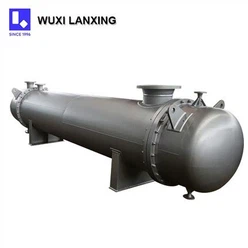
A shell and tube type heat exchanger is a widely used apparatus designed for heat transfer. It features a large cylindrical shell encasing a series of parallel tubes.
Send InquiryChat NowWhat Is Shell and Tube Type Heat Exchanger?
A shell and tube type heat exchanger is a widely used apparatus designed for heat transfer. It features a large cylindrical shell encasing a series of parallel tubes. These tubes are arranged within the shell to facilitate the transfer of heat between two fluids.
Durable: The shell and tube type heat exchangers are made using strong and durable materials that can withstand different conditions
Versatile: Shell and tube type heat exchangers are capable of handling fluid types that include those of vicious and corrosive nature
Reduction in downtime: With shell and tube type heat exchanger there is better cleaning and maintenance therefore reducing downtime
Competent: Due to its high heat transfer rate, this heat exchanger works for a wide variety of applications including high-pressure applications
Cost-effective: The shell and tube type heat exchanger work at a low cost rate compared to other heat exchangers
Scalability: The shell and tube type heat exchanger come in a range of sizes that can be easily scaled up or down to meet the changing needs of a process.

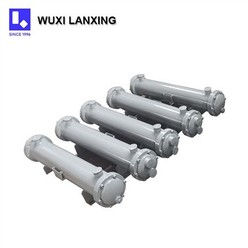
Heat Exchanger for Air Compressor
We produce Heat Exchanger For Air Compressor in strict accordance with industry standards and processes. Our company has a strict production management system to ensure the quality of each product. We support all kinds of things, welcome to consult.

Our company produces and supplies Air Compressor Heat Exchanger. The equipment is developed by using quality-inspected raw materials according to industry specifications and using advanced technology.

Fixed Tube Sheet Heat Exchanger
Fixed Tube Sheet Heat Exchanges refers to a shell-and-tube heat exchanger in which the tube sheets at both ends of the tube bundle are fixedly connected to the shell by welding. After the tube sheet is welded to the shell, it can also be used as a flange, and it is connected with the flange of the tube box by bolts.

Tube Bundle Heat Exchangers are a typical heat exchange equipment that allows two fluids with different temperatures to exchange heat. Through this equipment, one fluid can be cooled and the other fluid can be heated to meet their respective needs.

Double Tube Heat Exchanger is used for evaporation, heating, condensation, and cooling processes. It is a necessary equipment for heat exchange and transfer in the production process.
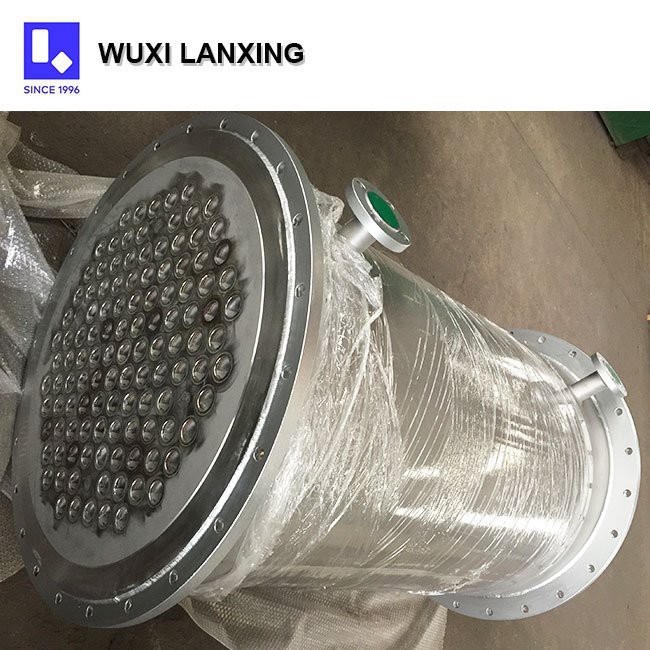
Titanium Shell and Tube Heat Exchanger
Titanium Shell And Tube Heat Exchanger is a heat exchange device made of high-quality titanium tubes that transfers part of the heat of the hot fluid to the cold fluid.

Stainless Steel Heat Exchanger Shell Tube
Stainless Steel Heat Exchanger Shell Tube is a heat exchanger made of stainless steel material. It has very good oxidation resistance, safety and hygiene, and is widely used in food, medicine, heating, domestic water, air conditioning backwater and other fields.

Steel Shell and Tube Heat Exchanger
Steel Shell And Tube Heat Exchanger is one of our company's best-selling products. We have modern equipment and management to ensure product quality. We have the ability to produce products that meet ASME, PED, CE, JIS, IBR, MOM, DOSH, GB and other standards.

Shell and Tube Heat Exchanger Used for Oil Cooling
Shell And Tube Heat Exchanger Used For Oil Cooling adopts corrosion-resistant high-efficiency heat transfer tubes, which are arranged closely and reasonably to strengthen the heat transfer coefficient, effectively improve the heat transfer effect and effectively extend the service life.
Our factory
Our factory covers 15,000 square meters area including modern workshops, testing center of flaw detection, physical and chemical labs, welding labs and the office building.
Professional team
With 130 professional staff, we are dedicated to providing the high efficient, quality products and excellent services.
Production equipment
Various Welding Machines, Roller, Shearer, Bending Machine, X Ray Detection Machines, Traveling Cranes.
Rich experience
Operation experience of professional foreign trade export projects.

Fixed tube heat exchanger
The fixed tube heat exchanger is a cost-effective solution with a straightforward design. In this type, the shell and tube sheet are welded together, preventing the removal of the tube bundle. Maintenance is simplified as the straight tubes can be easily cleaned with a brush or rod, though the shell side requires chemical cleaning or manual pressure washing.
U tube heat exchanger
U tube heat exchangers offer a design where the tubes are not connected with any fixed joint, allowing them to expand freely within the shell. This design eliminates the need for expansion bellows, simplifying the thermal expansion challenge.
Floating head heat exchanger
The floating head heat exchanger is characterized by its ability to withdraw the tube bundle from the shell for separate inspection. This design facilitates comprehensive cleaning, allowing access to the shell side, tube side, and both inside and outside of the tubes.
As with all heat exchangers, you can also group them according to the process they are involved in.
Coolers and heaters:
When there is temperature change but not phase change (e.g. liquid to gas, gas to liquid). For example, when you have hot water on one side and cold water on the other side, they don't change phase. Similarly, when you use hot air to cool cold air, or water on one side to cool argon.
Condensers:
Where the process fluid will condense, phase changing from a gas to a liquid.
Reboilers:
Where there is hot fluid (steam, for example) which will condense on one side, and on the other side you have fluid which will boil off. In other words, there is liquid coming at one end, and at the other end you will have 100% vapour (kettle reboiler) or vapour/liquid mixture (thermosyphon reboilers).

Power generation:
The power generation industry heavily relies on shell and tube type heat exchangers for efficient heat transfer in various processes. They are used in condensers to convert steam back into water for reuse, improving overall plant efficiency. Additionally, these heat exchangers are utilized in feedwater heaters to preheat the water before it enters the boiler, reducing energy consumption and enhancing thermal efficiency.
Oil and gas industry:
In the oil and gas sector, shell and tube type heat exchangers are employed in crucial applications such as crude oil cooling, gas compression, and natural gas processing. They enable effective heat exchange between different process streams, facilitating the separation and purification of valuable products. The robust construction of these exchangers allows them to handle high pressures and temperature differentials, making them suitable for demanding oil and gas operations.
Chemical processing:
Shell and tube type heat exchangers find extensive use in chemical processing plants, where precise temperature control and efficient heat transfer are vital. They play a pivotal role in processes such as distillation, evaporation, and condensation. These heat exchangers can handle corrosive fluids and provide optimal heat transfer rates, ensuring the integrity of chemical reactions and improving overall process efficiency.
Food and beverage industry:
In the food and beverage industry, shell and tube type heat exchangers play a crucial role in processes like pasteurization, sterilization, and food preservation. They enable precise temperature control and efficient heat transfer, ensuring the safety and quality of food products. These exchangers are designed to meet strict sanitary standards, making them suitable for handling edible fluids.
Pharmaceutical and biotechnology:
Shell and tube type heat exchangers find applications in pharmaceutical and biotechnology industries, where precise temperature control and sterile conditions are paramount. They are used in processes like fermentation, crystallization, and solvent recovery. The ability of these exchangers to handle high temperatures and maintain sterile conditions makes them essential in critical pharmaceutical and biotech processes.
Refrigeration and cold storage:
Shell and tube type heat exchangers are extensively used in refrigeration systems and cold storage facilities. They play a critical role in transferring heat between the refrigerant and the surrounding environment, enabling efficient cooling and maintaining low temperatures. These heat exchangers contribute to the preservation of perishable goods, such as food and pharmaceuticals, ensuring their quality and extending their shelf life.
Pulp and paper industry:
In the pulp and paper industry, shell and tube type heat exchangers are employed in various processes, including pulp digestion, evaporation, and drying. They enable efficient heat transfer and temperature control, ensuring optimal conditions for pulp processing and paper production. These heat exchangers play a crucial role in energy recovery from process streams, leading to significant cost savings and reduced environmental impact.
Waste heat recovery:
Shell and tube type heat exchangers are instrumental in waste heat recovery systems, where they capture and utilize the heat generated as a byproduct of industrial processes. By transferring the waste heat to a different fluid or system, these exchangers can generate additional energy or provide heating for other applications. Waste heat recovery using shell and tube type heat exchanger contributes to energy efficiency, reducing the reliance on primary energy sources and minimizing greenhouse gas emissions.
Automotive and aerospace industries:
The automotive and aerospace sectors make use of shell and tube type heat exchanger in various applications. In automotive cooling systems, these exchangers assist in engine cooling and facilitate the transfer of heat between the engine coolant and the surrounding air. In aerospace applications, shell and tube type heat exchangers are utilized in aircraft engine cooling, hydraulic systems, and environmental control systems, ensuring optimal performance and safety.
Shell
The shell is the heat exchanger's outermost part which holds the tube bundle. It is commonly a cylindrical container constructed from steel or other appropriate substances.
Tubes or tube bundle
A collection of parallel tubes running along the length of the shell makes up the tube bundle. Depending on the specific use, the tubes can be composed of different materials, such as stainless steel, copper, or titanium. The diameter and thickness of the tubes are also important design parameters.
Tube sheets
Tube sheets are sturdy sheets that act as a barrier between the tube bundle and the shell. They are commonly constructed using steel and are fused to the shell to ensure a firm and leak-free closure. The tubes are inserted through holes in the tube sheets and are either expanded or welded in position.
Baffles
Baffles are plates or rods that are placed inside the shell to regulate the movement of fluid around the tube bundle. These can be either longitudinal or transverse in orientation and are intended to enhance the effectiveness of heat transfer.
Inlet and outlet nozzles
The inlet and outlet nozzles serve as the entry and exit points for fluids in the heat exchanger. These connections are usually placed at opposite ends of the shell and are attached to the tubes and the shell using flanges or other types of fittings.
Expansion joints
Expansion joints are flexible connectors that accommodate the tube bundle's thermal expansion and contraction. Usually situated at the inlet and outlet of the heat exchanger, these joints are constructed using metal bellows or other flexible materials.
Support structures
Support structures hold heat exchangers in position, ensuring a stable foundation. Support structures can be either temporary or permanent and may be made of steel or other materials.
How to Maintain Shell and Tube Type Heat Exchanger
Periodic inspection:Inspect the inside and outside of the pipes regularly and assess their condition. Failure to keep all pipes clean can result in a termination of flow, which can lead to leaks and ruptures in the pipes.
Cleaning: Clean the tubes and shell of the shell and tube type heat exchanger to remove any debris, scale, or dirt that may have accumulated over time. This can be done using mechanical cleaning methods, such as brushing or high-pressure water jets, or chemical cleaning methods, such as acid cleaning.
Repair and replacement: Replace any damaged or worn parts of the shell and tube type heat exchanger, such as tubes, gaskets, or seals, as needed.
Lubrication: Lubricate any moving parts of the shell and tube type heat exchanger to ensure smooth operation.
Corrosion prevention: Take steps to prevent corrosion, such as using corrosion-resistant materials, applying coatings or inhibitors, or controlling the PH or oxygen content of the fluid.
Monitoring: Monitor the performance of the shell and tube type heat exchanger, such as temperature, pressure, and flow rate, to detect any problems or changes in operation.
Record keeping: Keep detailed records of maintenance activities, repairs, and replacements, as well as any performance data or changes in operation.
The working principle of a shell and tube type heat exchanger can be understood through the following steps:
The hot fluid, also known as the process fluid, enters the heat exchanger through an inlet and flows through the tubes. Simultaneously, the colder fluid, called the service fluid, enters the shell and circulates around the tubes.
As the process fluid flows through the tubes, it transfers its heat to the colder service fluid flowing around the tubes. The heat transfer occurs through the tube walls, creating a temperature gradient between the fluids.
The design of the heat exchanger maximizes the surface area available for heat transfer by incorporating numerous tubes. This increased surface area enhances the overall thermal efficiency of the exchanger, ensuring effective heat transfer.
Shell and tube type heat exchanger can operate in two main configurations: Counterflow and parallel flow. In counterflow, the hot fluid and cold fluid flow in opposite directions, optimizing the heat transfer efficiency. In parallel flow, both fluids flow in the same direction, moreover, heat transfer efficiency is lower compared to counterflow.
The company is a 'Member of China Interior Decoration Association', 'National Excellent Enterprise in Air Interior Decoration', and was rated as 'Top Ten Brands of Electric Curtains', with 7 product patents, and it is well-known in the industry.
Professional manufacturer of pressure vessels and heat exchangers, Wuxi LanXing Pressure Vessel Co., Ltd. is located in Wuxi city, eastern China. Our factory covers 15,000 square meters area including modern workshops, testing center of flaw detection, physical and chemical labs, welding labs and the office building. With 130 professional staff, we are dedicated to providing the high efficient, quality products and excellent services.


Hot Tags: shell and tube type heat exchanger, China shell and tube type heat exchanger manufacturers, suppliers, factory, tube and shell type heat exchanger, enthalpy exchanger, cracked combustion chamber oil furnace, fixed tube sheet, double tubesheet heat exchanger, heat exchanger for aerospace industry
Professional manufacturer of pressure vessels and heat exchangers, Wuxi LanXing Pressure Vessel Co., Ltd. is located in Wuxi city, eastern China.


Tel: +86-510-88156399
Mob1: +8615852701809
Mob2: +8615951506886
Mob3: +8615952470757
Email: Zyc@cn-lxjt.com
Add: No.19, Feng Er Road, Xinwu District, Wuxi City, Jiangsu Province, China
Copyright © Wuxi Lanxing Pressure Vessel Co., Ltd. All Rights Reserved.Privacy Policy