+86-510-88156399



Finned tube heat exchangers are the type of heat exchangers in which fins are attached to the outer tube of the exchanger.
Send InquiryChat NowWhat Is Finned Tube Heat Exchangers?
Finned tube heat exchangers are the type of heat exchangers in which fins are attached to the outer tube of the exchanger. Adding fins facilitates the transfer of fluid outside the tube. It is for the transfer of air or another gas. In a finned tube heat exchanger, an overall flow pattern is often crossflow, but it can also be counterflow or parallel flow.
Enhanced heat transfer: Finned tube heat exchangers are designed with fins on the outer surface of the tubes, which increases the surface area of the tube. This increased surface area allows for better heat transfer between the fluid flowing inside the tube and the fluid flowing over the fins. The fins disrupt the flow of fluid around the tube, creating turbulence that enhances heat transfer.
Compact design: Finned tube heat exchangers are more compact than plain tube heat exchangers due to their increased surface area. This makes them ideal for applications where space is limited. Finned tube heat exchangers can be designed to fit in tight spaces and can be used in applications where larger, bulkier heat exchangers would not be feasible.
Improved durability: The fins on the tubes provide added protection against erosion and corrosion. The fins act as a barrier between the tube and the fluid flowing over it, which can help to reduce the effects of erosion and corrosion. This increases the life of the heat exchanger and can reduce maintenance costs over time.
Versatility: Finned tube heat exchangers can be designed for a wide range of temperatures and pressures. They can be used in applications that require high or low temperatures, high or low pressures, or corrosive fluids. This versatility makes them suitable for a variety of industries, including petrochemical, hvac, and power generation.
Cost-effective: Despite their enhanced performance, finned tube heat exchangers can be manufactured at a lower cost than other types of heat exchangers. This is because they are typically made using less material than other types of heat exchangers. Additionally, their compact design means that they require less space, which can help to reduce installation and operating costs.

Heat Exchanger for Air Compressor
We produce Heat Exchanger For Air Compressor in strict accordance with industry standards and processes. Our company has a strict production management system to ensure the quality of each product. We support all kinds of things, welcome to consult.

Our company produces and supplies Air Compressor Heat Exchanger. The equipment is developed by using quality-inspected raw materials according to industry specifications and using advanced technology.

Fixed Tube Sheet Heat Exchanger
Fixed Tube Sheet Heat Exchanges refers to a shell-and-tube heat exchanger in which the tube sheets at both ends of the tube bundle are fixedly connected to the shell by welding. After the tube sheet is welded to the shell, it can also be used as a flange, and it is connected with the flange of the tube box by bolts.

Tube Bundle Heat Exchangers are a typical heat exchange equipment that allows two fluids with different temperatures to exchange heat. Through this equipment, one fluid can be cooled and the other fluid can be heated to meet their respective needs.

Double Tube Heat Exchanger is used for evaporation, heating, condensation, and cooling processes. It is a necessary equipment for heat exchange and transfer in the production process.
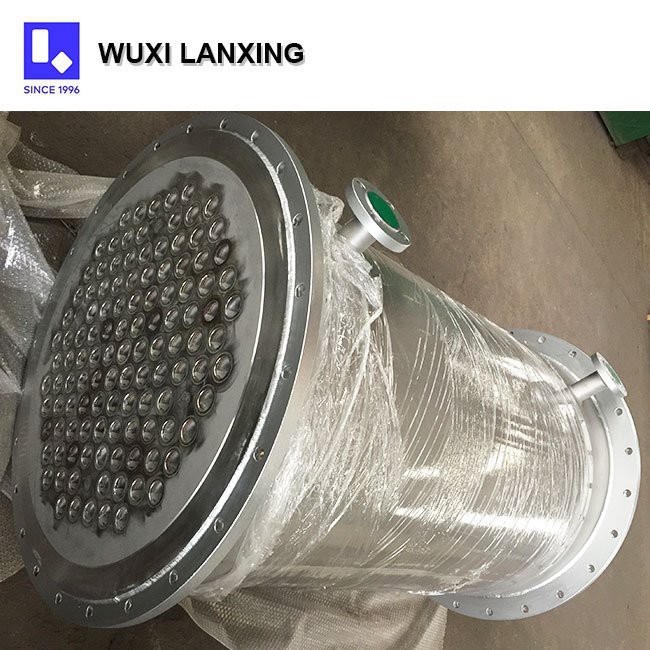
Titanium Shell and Tube Heat Exchanger
Titanium Shell And Tube Heat Exchanger is a heat exchange device made of high-quality titanium tubes that transfers part of the heat of the hot fluid to the cold fluid.

Stainless Steel Heat Exchanger Shell Tube
Stainless Steel Heat Exchanger Shell Tube is a heat exchanger made of stainless steel material. It has very good oxidation resistance, safety and hygiene, and is widely used in food, medicine, heating, domestic water, air conditioning backwater and other fields.

Steel Shell and Tube Heat Exchanger
Steel Shell And Tube Heat Exchanger is one of our company's best-selling products. We have modern equipment and management to ensure product quality. We have the ability to produce products that meet ASME, PED, CE, JIS, IBR, MOM, DOSH, GB and other standards.

Shell and Tube Heat Exchanger Used for Oil Cooling
Shell And Tube Heat Exchanger Used For Oil Cooling adopts corrosion-resistant high-efficiency heat transfer tubes, which are arranged closely and reasonably to strengthen the heat transfer coefficient, effectively improve the heat transfer effect and effectively extend the service life.
Our factory
Our factory covers 15,000 square meters area including modern workshops, testing center of flaw detection, physical and chemical labs, welding labs and the office building.
Professional team
With 130 professional staff, we are dedicated to providing the high efficient, quality products and excellent services.
Production equipment
Various Welding Machines, Roller, Shearer, Bending Machine, X Ray Detection Machines, Traveling Cranes.
Rich experience
Operation experience of professional foreign trade export projects.
Plain finned heat exchangers:
Comprising flat fins affixed to the tube surfaces.
Employed in scenarios necessitating heat transfer between a liquid and a gas, such as in air conditioning systems, refrigeration units, and process cooling. Effective for systems with moderate temperature differences.
Serrated finned heat exchangers:
Feature fins with serrated edges inducing turbulence in the air stream to boost heat transfer rates.
Applied in situations requiring enhanced heat transfer, especially in high-temperature applications or instances with significant temperature differences. Frequently found in industrial heating and cooling systems.
Extruded finned heat exchangers:
Fins formed by extruding metal material around the tubes, typically rectangular and tightly bonded.
Employed in applications demanding high heat transfer rates, such as in air compressors, power generation, and the oil and gas industries.
Plate fin heat exchangers:
Comprise stacked flat metal plates with alternating layers of corrugated fins, providing ample surface area for heat transfer.
Ideal for space-constrained environments, prevalent in aerospace, automotive, and compact industrial systems. Noteworthy for their lightweight nature and commendable thermal performance.
Tubular finned heat exchangers:
Finned tubes bent into a serpentine or helical shape to increase surface area, allowing for compact installations.
Widely employed in heat recovery systems, waste heat boilers, and process industries where high-efficiency heat transfer is imperative.
Integral finned heat exchangers:
Fins integrally formed with the tube material, typically via processes like extrusion or roll forming.
Exhibiting excellent heat transfer performance, these heat exchangers are commonly applied in air preheaters, air coolers, and industrial drying systems.
Application of Finned Tube Heat Exchangers
HVAC Systems
Finned tube heat exchangers are widely used in heating, ventilation, and air conditioning (HVAC) systems to improve the efficiency of heat exchange processes. They are used in air handlers, condensers, and evaporators to enhance thermal performance.
Power Plants
In power plants, finned tube heat exchangers play a crucial role in various heat recovery applications. They are used in economizers, air preheaters, and condensers to improve energy efficiency and reduce fuel consumption.
Chemical Processing
The chemical processing industry utilizes finned tube heat exchangers for heating and cooling process fluids. Their ability to handle high temperatures and pressures makes them suitable for a variety of chemical reactions and processes.
Automotive Industry
Finned tube heat exchangers are commonly used in automotive radiators and intercoolers to improve the efficiency of engine cooling systems. They help maintain optimal operating temperatures, ensuring the longevity and performance of the engine.
Petrochemical Industry
In the petrochemical industry, finned tube heat exchangers are used for heat recovery and process fluid heating. Their robust design and high heat transfer efficiency make them ideal for demanding applications.

Tubes: The core component of the heat exchanger consists of a network of tubes through which one fluid flows, transferring heat to or from another fluid. The material and size of these tubes depend on the application and the properties of the fluids being exchanged.
Fins: Fins are extended surfaces attached to the outside of the heat exchange tubes. They increase the surface area of the tubes and, as a result, improve heat transfer efficiency. Fins can be of various shapes, including plain, serrated, or corrugated, and are typically made of materials like aluminum or copper.
Tube Sheets: Tube sheets are typically located at both ends of the heat exchanger and serve to hold and support the tubes. They help to maintain the proper spacing and alignment of the tubes.
Headers: Headers are the inlet and outlet components of the heat exchanger that connect the tubes to the fluid distribution system. They distribute the fluid evenly across the tubes to ensure efficient heat exchanger.
Baffles: Baffles are internal components designed to guide the fluid flow through the heat exchanger. They help control the flow velocity and prevent direct bypassing of the tubes.
Shell: In some finned tube heat exchangers, a shell encases the tubes and fins. The shell may be cylindrical, rectangular, or another shape, and it provides structural support and protection for the tubes.
Fluid Inlet and Outlet Connections: These are the connections through which the hot and cold fluids enter and exit the heat exchanger. Proper design and sizing of these connections are essential for efficient heat transfer.
Support Structures: In larger or industrial-scale finned tube heat exchangers, support structures such as braces or hangers are used to secure the heat exchanger in place.
Mounting and Housing: For some applications, the heat exchanger may be enclosed within a housing or mounted within a larger system to protect it from environmental factors and ensure proper operation.
Thermal Insulation: In cases where temperature control and energy efficiency are critical, thermal insulation may be added to reduce heat loss from the heat exchanger.
Clean-out Ports: These ports provide access for inspection and maintenance, allowing for cleaning and, if necessary, repair or replacement of the tubes and fins.
Regular inspection: Periodically inspect the heat exchanger for signs of wear, corrosion, or damage. Look for cracks in the tubes, damage to the fins, and signs of leakage.
Cleaning: Clean the fins and tubes to remove dirt, dust, and debris that can reduce heat transfer efficiency. Use compressed air, brushes, or water as appropriate.
Chemical cleaning: In cases of fouling due to scaling or deposits, chemical cleaning may be necessary. Use appropriate chemicals and follow manufacturer guidelines.
Inspect fins: Check the condition of the fins for damage or corrosion. Damaged fins can be replaced to restore heat transfer efficiency.
Tighten connections: Check and tighten any loose bolts, clamps, or connections to prevent leaks and ensure structural integrity.
Check for leakage: Inspect the heat exchanger for signs of leakage, such as water or refrigerant leaks. Address any leaks promptly to prevent further damage.
Monitoring and data logging: Implement a monitoring system that tracks temperature differentials, flow rates, and other relevant parameters. This data can help identify performance issues.
Record keeping: Maintain detailed records of maintenance activities, including dates, repairs, replacements, and any issues encountered.
A finned tube heat exchanger is a type of heat exchanger that uses tubes with fins to increase the surface area for heat transfer. Finned tube heat exchangers work by transferring heat from one fluid to another through the tubes, and the fins increase the efficiency of the heat transfer.
The process generally involves the following steps:
One fluid (the hot fluid) enters the heat exchanger through the inlet and flows through the tubes. Another fluid (the cold fluid) enters the heat exchanger through the inlet and flows around the tubes.
As the hot fluid flows through the tubes, heat is transferred from the hot fluid to the tube walls by convection. The tube walls then conduct the heat to the fins attached to the outside of the tubes.
The fins increase the surface area available for heat transfer, allowing for more efficient heat transfer from the tube walls to the fins.
The cold fluid flows around the fins, and heat is transferred from the fins to the cold fluid by convection. The cold fluid then flows out of the heat exchanger through the outlet
In some cases, the heat transferred to the fins may be dissipated to the environment by natural or forced convection.
Professional manufacturer of pressure vessels and heat exchangers, Wuxi LanXing Pressure Vessel Co., Ltd. is located in Wuxi city, eastern China. Our factory covers 15,000 square meters area including modern workshops, testing center of flaw detection, physical and chemical labs, welding labs and the office building. With 130 professional staff, we are dedicated to providing the high efficient, quality products and excellent services.


Hot Tags: finned tube heat exchangers, China finned tube heat exchangers manufacturers, suppliers, factory, thermal exchanger, single pass and multi pass heat exchanger, Copper Tube Heat Exchanger, heat pump air exchanger, shell & tube heat exchanger, kgs pressure vessel
Professional manufacturer of pressure vessels and heat exchangers, Wuxi LanXing Pressure Vessel Co., Ltd. is located in Wuxi city, eastern China.


Tel: +86-510-88156399
Mob1: +8615852701809
Mob2: +8615951506886
Mob3: +8615952470757
Email: Zyc@cn-lxjt.com
Add: No.19, Feng Er Road, Xinwu District, Wuxi City, Jiangsu Province, China
Copyright © Wuxi Lanxing Pressure Vessel Co., Ltd. All Rights Reserved.Privacy Policy